Sweet Child O' Mine
The most recognizable guitar intro of the eighties was an accident — a finger exercise Slash never meant to keep.
Slash wrote the riff as a joke.
A finger exercise, something to keep his hands moving, the kind of figure a guitarist plays without thinking while he waits for everyone else in the room to be ready. Axl Rose heard it through the wall, from another room, and told him to keep playing. That is the entire origin of the most recognizable guitar intro of the 1980s. One man fooling around. One man in the next room who stopped what he was doing to listen.
That story usually gets told as trivia. It isn’t trivia. It’s the reason to trust the song. The melody fell out of a warm-up — nobody engineered it to move anyone, nobody sat down to write a hit, nobody decided in advance that this was the one. Whatever it does to a room, it does honestly, because the man playing it didn’t know he was writing anything at all.
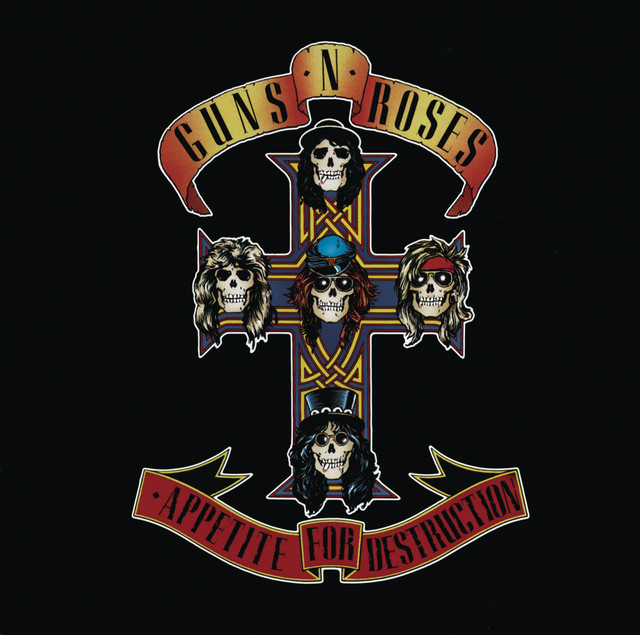
Axl wrote the words for Erin Everly, and what he wrote was fear. Not the swagger the band traded in everywhere else on Appetite for Destruction — fear. He was scared of how much he loved her, and instead of burying that he put it on the record. You can hear it in the way his voice cracks on the question the whole song has been climbing toward: where do we go now. He didn’t know. That’s the point. He was terrified, and he asked it anyway.
That is the part worth keeping. Most people, scared of how much they feel, go quiet. He set the fear down next to the love and sang both at full volume.
“She’s got eyes of the bluest skies, as if they thought of rain.”
A joke riff and a frightened lyric. That’s the whole song. It opens gentle and it builds into chaos, and the chaos is not a betrayal of the gentleness — the fear was there in the first bar, waiting. Fear doesn’t stay quiet. It never does.
Think about everything that had to line up for this to exist. Slash had to be loose enough to play something that didn’t matter. Axl had to be paying enough attention, one room away, to hear that it did. Neither of them was trying. The best thing either man would ever make arrived while they were doing something else, and the only thing the moment asked was that somebody notice — that somebody be the person who says keep playing.
That seems right. The things that matter most rarely announce themselves. They show up disguised as a warm-up, a throwaway, an ordinary afternoon, and they belong to whoever happens to be awake enough to catch them.
Where do we go now. The song never answers. It just asks, in a voice that cracks, and lets the question stand — which is braver than any answer it could have invented.