Kickstart My Heart
December 1987: Nikki Sixx's heart stopped. A needle of adrenaline started it again. Two years later he wrote the song about coming back.
In December 1987, Nikki Sixx’s heart stopped. Heroin overdose. Paramedics worked on a body that wasn’t responding, and then they put a needle full of adrenaline straight into his chest, and the heart started again.
Two years later, he wrote a song about it.
Hold that order of events for a second, because it’s the whole song. He didn’t write a song about getting clean. He didn’t write a cautionary tale, and he didn’t write an apology. He wrote about the rush of coming back — that moment when the heart kicks from nothing to everything and suddenly every sensation in the body is overwhelming and alive. A man died, was brought back with a needle, and the song he made from it is a party song.
You can call that reckless. I think it’s honest. The lesson version of that story — the one with the warning in it, the one that ends in a counselor’s office — would have been the respectable song to write. It also would have been a lie about what the moment actually felt like. Sixx wrote the moment.
The record opens with a motorcycle engine revving. Then the guitars come in like a car wreck, and Vince Neil is singing about how his heart has stopped before and it’s about to stop again.
Critics dismissed this band as cartoon rockers, and the critics weren’t wrong. Most of the catalog gives them their case — the hairspray, the strip-club poses, the songs that are about nothing but the volume they’re played at. But this song is the place where the cartoon has a real body under it. When Sixx sings about needing intensity to feel alive, he isn’t posturing. He’s describing the only way he knows how to exist. The excess in this song isn’t a costume and it isn’t a joke — it’s survival. That’s the difference between this and a hundred other songs that sound like it. Most party songs are about a feeling somebody decided to have. This one is about a feeling somebody was given by a needle in the chest, whether he wanted it or not. The screaming on top isn’t performance. It’s what the body does when it comes back online all at once.
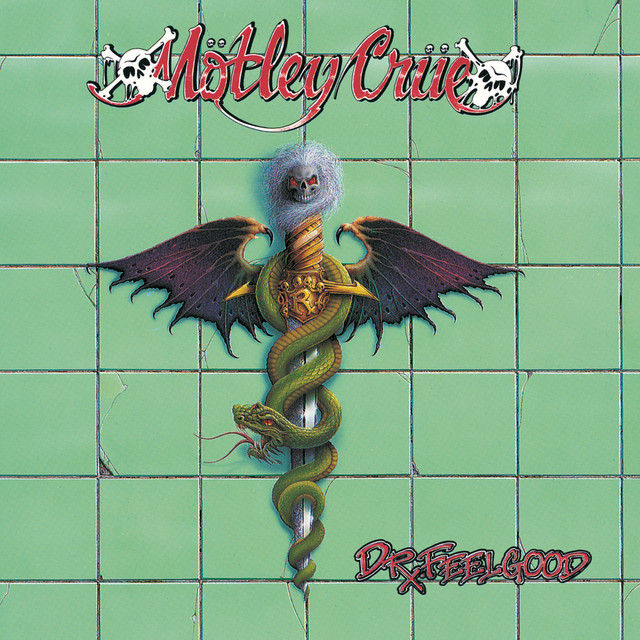
There’s one more fact worth sitting with. Dr. Feelgood was the band’s commercial peak, and they made it after getting sober — sober enough, finally, to actually play their instruments properly. The production is tight. The performances are locked in. And somehow the sober record is the most exhilarating thing they ever made, crackling with the energy of people who know exactly how close to the edge they’ve been.
That shouldn’t surprise anybody, but it does, because the myth says the wreckage is where the power comes from. The record says otherwise. The power was in the men the whole time; the wreckage just nearly took them before they could prove it. The song about the night Sixx’s heart stopped was recorded by a version of Sixx who had stepped back from the thing that stopped it — close enough to remember every second of it, far enough to play it clean. That distance is what you’re hearing. A man describing the electricity from the far side of it, with his hands steady.
I’m not going to argue this is a deep song. It’s four minutes and forty-nine seconds of guitars at full speed, and it works at a tailgate exactly the way it works in headphones. But it’s a true song, and that’s rarer than deep. Plenty of bands can fake the deep one. Almost nobody writes the true one, because the true one requires having actually been somewhere and being willing to report back from it without flinching. The man whose heart stopped in December 1987 sat down two years later and reported what the coming-back felt like, without dressing it up as a lesson he hadn’t learned yet. He didn’t owe the listener a moral and he didn’t pretend to have one.
Some songs are about living hard. This one’s about living after almost not.
His heart stopped. A needle started it. Everything in these four minutes and forty-nine seconds is what came through that needle.