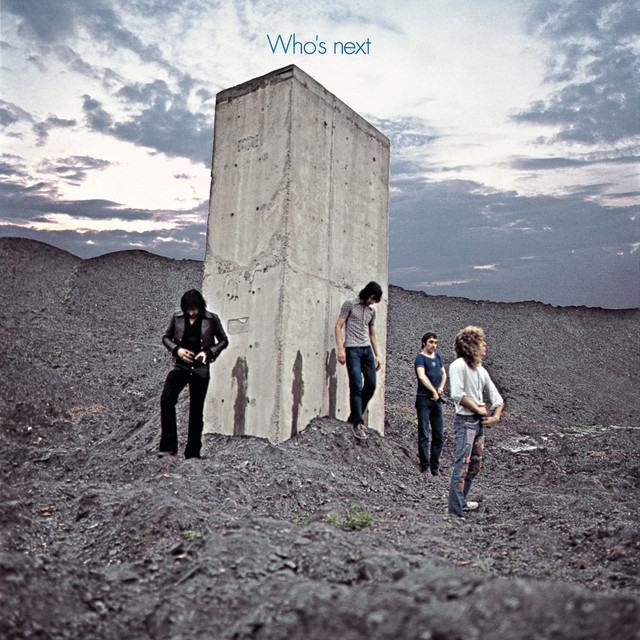
Baba O'Riley
Nobody sings the title. The song is called 'Baba O'Riley,' and every person who loves it screams two other words instead.
Nobody sings the title.
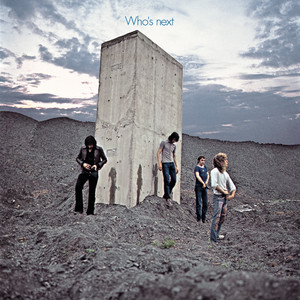
The song is called “Baba O’Riley.” There are two men’s names folded into that title — Meher Baba, Terry Riley — and a real history underneath it: the failed Lifehouse project, the synth arpeggios Townshend programmed, the place it holds on Who’s Next. All of that is true, and all of it is worth knowing. And none of it is what comes out of anybody’s mouth when the song is playing. What comes out is two different words. We’ll get to them.
Start with the first thirty seconds, because the song does.
A synthesizer, pulsing like a heartbeat. The pattern Townshend programmed runs by itself for a while — patient, repeating, almost delicate. Then an acoustic guitar comes in under it. Then Daltrey:
“Out here in the fields…”
He sings it like a man with something to tell you, and he is not asking permission to tell it.
Then Moon hits the drums, and the song detonates. That is the only honest word for it. There is the song before the drums and the song after the drums, and the line between them is about as subtle as a door coming off its hinges. Plenty of songs build. Very few of them keep the promise the build makes. This one pays out everything the first thirty seconds owed you, all at once, and then keeps paying for four and a half more minutes.
The song was built for a car. Windows down. Volume up past the point where the speakers start to distort — just a little, just enough. Your foot finds the accelerator. Your hand finds the steering wheel. And even alone, with nobody to hear you, your voice goes up with Daltrey’s on the words everyone knows.
Teenage wasteland.
That’s not the title. It has never been the title. It doesn’t matter. Fifty-odd years of people screaming it out of car windows have settled the question of what this song is actually called, and The Who’s opinion was only ever advisory.
Here is what I think the song is for.
It is five minutes of being sixteen. Not remembering sixteen — being it. The song doesn’t care if you’re forty-three and exhausted. It doesn’t ask what kind of week you’ve had or how much of it is still sitting on your chest. For five minutes the only thing that matters is the next beat, the next chord, the next chance to sing too loud. That is not a small thing to hand somebody. Most songs can’t do it for five seconds. This one does it for five minutes, every time, and it has never once failed me.
I want to be careful here, because this is the kind of claim that usually gets inflated. I’m not saying the song fixes anything. The week is still there when it ends. What I’m saying is narrower and, I think, truer: for the length of the song, you are not carrying it. That’s all. That’s enough.
And then the ending, which by any reasonable logic should not work. A violin — a classical instrument, sawing away on a hard rock song — while everything around it collapses into chaos. On paper it’s a mistake. Out loud it sounds like the whole world catching fire. I have no better explanation than that, and I’ve stopped looking for one.
This isn’t music you think about. It’s music you survive — five minutes you come out the other side of, breathing harder, gripping the wheel.
The history is there if you want it. Meher Baba, Terry Riley, Lifehouse, the programming, the album. The band put two names on the song.
Everyone who loves it sings a different one.