Hard Sun
Gordon Peterson wrote "Hard Sun" in 1988 and almost nobody heard it.
Gordon Peterson wrote “Hard Sun” in 1988 and almost nobody heard it.
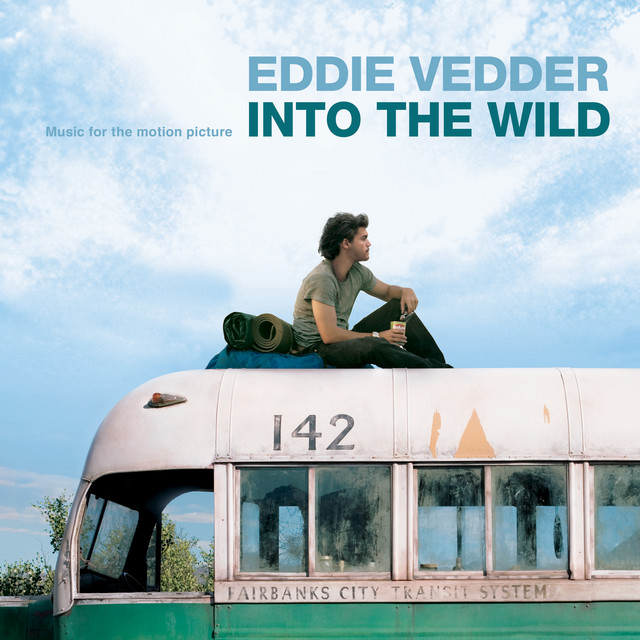
He recorded it under the name Indio — one album, Big Harvest, released on a small label, modest distribution, and then quiet. The song wasn’t lost exactly, but it wasn’t found either. It waited nineteen years before Eddie Vedder heard it, learned it, and carried it into a studio in 2007 to record the soundtrack for Sean Penn’s film about a young man who walked into the Alaskan wilderness and didn’t come back.
The song has no business being as old as it is. It sounds like it was written for the exact story Penn was filming — the story of Christopher McCandless, twenty-four years old, Emory graduate, who gave his savings to Oxfam, burned the cash in his wallet, abandoned his car, and disappeared into North America until he ended up in an abandoned bus outside Denali. He died there in August 1992, alone and underweight, one hundred days into the adventure he’d planned his whole short life. Jon Krakauer wrote the book. Penn made the film. Vedder made the music that held them together.
And at the center of all of it, he put someone else’s song.
“There’s a hard sun beating on the big people in the big city.”
That’s the opening line, and it lands the way a true thing does — not poetically, not with any special grace, just plainly and completely, like a door swinging open. Peterson wrote it and didn’t know who would need it. Vedder sang it and the whole film reorganized itself around the singing.
The production is spare. Vedder’s acoustic guitar, some percussion that sounds like it was recorded in a room with good wood floors, and his voice — which is doing something here it rarely gets to do. He’s not performing for a stadium. He’s not filling a room with the particular weight Pearl Jam taught him to carry. He’s just singing, at something close to his natural size, and the song asks for exactly that much and no more.
The hard sun beats down on everyone in this story. McCandless believed he could walk out from under it — that the wilderness would offer something the city and the suburb and the expectation of a law degree and a normal life couldn’t. He wasn’t wrong that the wilderness offered something real. He was wrong, in the end, about what he could survive. The sun doesn’t negotiate.
Vedder had been thinking about McCandless for years before Penn called. He’d read Krakauer’s book when it came out, the way a lot of people in their thirties read it — recognizing the hunger in the young man, understanding it in the bone, and also seeing clearly what the twenty-four-year-old couldn’t: that the hunger was real but the plan had fatal gaps. Vedder was old enough by then to hold both things. He wrote the original songs on the soundtrack and picked “Hard Sun” as the one he’d cover, which tells you something about what he heard in it.
Peterson’s lyric keeps returning to this image of something coming that will outlast everything human — all the effort, all the ambition, all the love people build and tend. “I go alone.” The song has a rugged kind of peace to it, not consoling exactly but honest, the way a clear sky is honest. It doesn’t promise shelter. It just describes what’s there.
The film ends where the book ends. The bus. The quiet. A young man who had made it further than almost anyone expected, undone by a river that ran too fast in the wrong season. There is something in his story that resists the clean lesson. He was not a fool. He was not simply reckless. He wanted to know what was true when everything constructed and inherited and assumed was stripped away — and he went to find out with a rifle and a bag of rice and a copy of Doctor Zhivago.
What he found was real. He wrote it down in the margins of books.
Vedder singing “Hard Sun” over the opening frames of the film sets the terms: this is not a cautionary tale and it is not a heroism tale. It is a life that burned brightly and briefly and honestly, under a sun that doesn’t distinguish between the two.
Peterson wrote the song and put it in a drawer the world barely opened. Vedder pulled it out and held it up to the light, and it turned out to be exactly the right shape for what it needed to carry. That happens sometimes with songs. They wait for the moment that reveals what they were always about.
The hard sun keeps beating. That’s all it does. That’s all it’s ever done.