Black Balloon
John Rzeznik wrote "Black Balloon" about watching someone he loved disappear into addiction, and he wrote it as a lullaby.
John Rzeznik wrote “Black Balloon” about watching someone he loved disappear into addiction, and he wrote it as a lullaby.
That tension — between the gentleness of the form and the terror of the subject — is the whole song. He didn’t write a rock track about drugs. He wrote something soft and patient, the kind of song you’d sing to keep someone asleep, because the waking world was too dangerous for them right now.
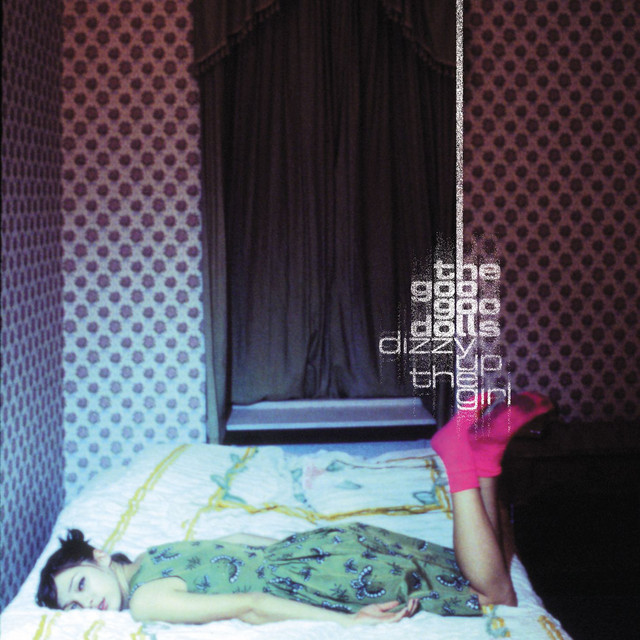
Dizzy Up the Girl came out in 1998 on Warner Bros., the record that turned the Goo Goo Dolls from a scrappy Buffalo band with a cult following into something considerably larger. “Iris” had already done what “Iris” does — that song had a gravitational pull that still hasn’t fully released. But “Black Balloon” is the record’s quiet center, slower than almost everything around it, built on an acoustic guitar figure that loops like a held breath.
Rzeznik has talked about the song being drawn from a real relationship — a woman he cared about whose drug use was pulling her somewhere he couldn’t follow. That specificity matters. This isn’t a generalized portrait of struggle. It’s a man standing in a room with someone he loves, watching her be somewhere else entirely, and choosing to stay anyway.
The opening lines do something unusual. “Baby’s black balloon makes her fly.” It’s an image that could be read as beautiful — balloons rise, after all — and the song knows exactly what it’s doing with that ambiguity. What lifts you can also untether you. What carries you away from pain carries you away from everything else too. The line doesn’t editorialize. It just holds the image up to the light and lets you see both things at once.
The production is built around restraint. Rob Cavallo produced the album — he’d just come off Dookie and Nimrod with Green Day, records that ran hot and fast. Here he pulled in the opposite direction. The arrangement breathes. There’s space between the instruments. Drummer Mike Malinin plays like he’s trying not to break something, and the bass from Robby Takac stays low and careful underneath. The gentleness isn’t accidental. Cavallo understood that the song’s emotional weight required a light touch — that if you pushed it too hard, you’d crush what made it work.
Rzeznik’s vocal is the most unguarded thing he’d put on tape. His voice on a lot of the Goo Goo Dolls’ earlier records had an edge, the roughness of a band that came up playing bars in a rust belt city. Here he sounds like someone who has stopped protecting himself. “I don’t want to be your monkey wrench.” The line is almost clumsy in the best way — honest before it’s poetic, which is the right order.
The black balloon of the title is never explained and doesn’t need to be. It accumulates meaning as the song goes. It’s the thing pulling her away. It’s the addiction itself. It’s grief. It’s whatever has settled over someone you love and made them unreachable. The specificity of the image — not darkness, not shadow, but a balloon, something that should be light and celebratory — is what makes it land so hard.
The song peaked at number sixteen on the Billboard Hot 100, which is a fine chart position and also beside the point. What it actually did was become the kind of song people kept. Not as a hit from 1999 but as a private object — something they returned to when someone in their life was in the grip of something they couldn’t name or fix. The album has sold over six million copies worldwide, and “Black Balloon” is the track that gets referenced most often in the quieter conversations, the ones not about music.
What Rzeznik figured out — and it’s harder to figure out than it looks — is that love and helplessness can occupy the same sentence without canceling each other out. The narrator of this song isn’t saving anyone. He’s not offering solutions. He’s just there, staying, watching, holding on to something that may or may not be mutual. “Comin’ down the world turned over, and angels fall without you there.”
That’s not a love song in the radio sense. It’s closer to a vigil.
The lullaby structure earns its keep here. A lullaby is what you sing when you can’t do anything else. When the only power you have is to stay in the room and keep your voice steady and hope that the sound of it reaches wherever the person you love has gone. Rzeznik found the right form for what he was trying to say — not because lullabies are soft, but because they’re the music of endurance.
You sing one when there’s nothing left to do but keep singing.