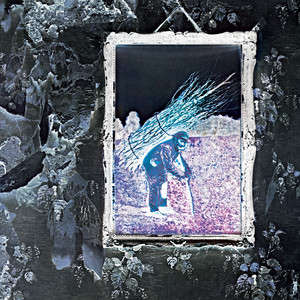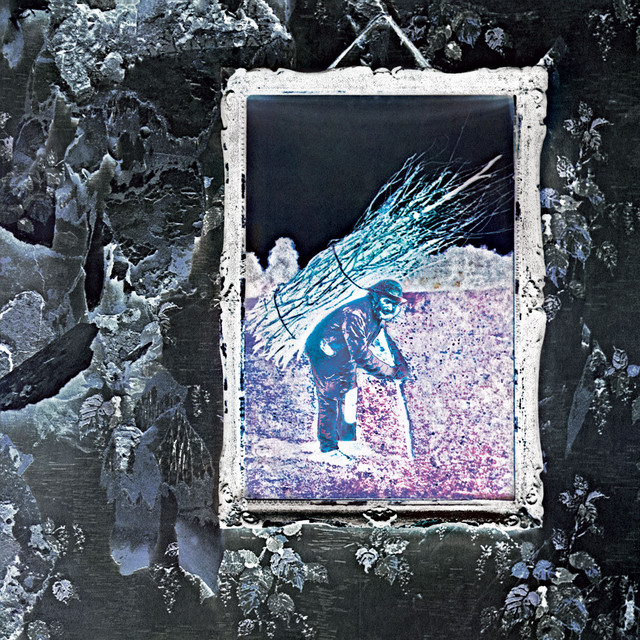
When the Levee Breaks
Jimmy Page hung microphones in a stairwell and put John Bonham at the bottom. The flood came out.
Jimmy Page hung microphones from the upper floors of a stairwell, put John Bonham at the bottom with his drums, and let physics do the rest.
That’s the whole apparatus. You’ve heard the result a thousand times, probably without knowing where it came from — hip-hop producers have sampled that drum sound onto more tracks than anyone can count. It came out of a stairwell.
The stairwell was in Headley Grange, a drafty old manor house in England where Led Zeppelin set up to record. Stone floors, high ceilings — a building terrible for conversation and, it turned out, exactly right for capturing the sound of John Bonham hitting things. Nobody designed that room to do what it did. Page just noticed what the house was and used it.
I want to be plain about why this matters. Most of what we call a “sound” in recorded music is a hundred small decisions stacked up. This one was a single decision: put the drummer at the bottom of the stairs and listen from above. The simplicity of it is the thing I keep coming back to. The biggest drum sound anyone had put on tape was not built. It was found.
But the drums are only half of what’s in this song, and they’re the newer half.
The song underneath is a 1929 blues number by Memphis Minnie, written about the Great Mississippi Flood. That flood killed hundreds of people and displaced nearly a million more. The original is a desperate Delta folk song about real water, real levees, real dead. That’s what Zeppelin picked up forty-some years later — not a riff, not a title, but a record of an actual catastrophe.
What they did with it was slow it down and make it enormous. Seven minutes, at a tempo that feels like continental drift. The flood in Memphis Minnie’s version is something that happened. The flood in Zeppelin’s version is something that is always about to happen, forever, moving toward you at the speed of weather.
Robert Plant’s harmonica is the one element that admits where the song came from — the only thread back to the Delta. Everything else has changed shape. Page’s guitar spirals through backwards echoes. John Paul Jones’s bass rumbles somewhere beneath the earth. The blues is in there, but what’s playing has evolved past it into a different species.
The levee in the song starts literal. It doesn’t stay that way.
Sing about a wall holding back water for seven minutes and the wall becomes every breaking point a person knows about. Every system pushed past its capacity. Every relationship held together by will when the foundation is already crumbling. The song never says any of that. It doesn’t have to. “Going down now,” Plant howls, and you believe him — not as a performance of doom but as information.
That’s the part I’d defend hardest about this record. It doesn’t build to a climax. There is no release valve, no bridge where the sun comes out. It starts at maximum weight and holds it for seven minutes, and the holding is the song. Most people can’t play it on repeat. It’s too heavy, too relentless, and I think that’s honest. A flood doesn’t crescendo. It just keeps coming.
So here is what’s actually on the record. A 1929 song about hundreds of dead and a million displaced, carried forward by a band that understood the weight of it and refused to lighten it. A harmonica keeping faith with the Delta. And a drummer at the bottom of an English staircase, microphones hanging above him, playing the sound of the water coming through.
Some songs rock. This one crushes — and it crushes because the weight was real before the band ever touched it.
They hung microphones in a stairwell, and a flood from 1929 came out.