One Headlight
Jakob Dylan wrote the song about nobody in particular, and that's exactly why it sounds like everybody.
“One Headlight” is a sad song. Push back if you want — it won Best Rock Song at the 1998 Grammys, the chorus feels great with the windows down, the whole band opens up on it like a hit. But listen to what the chorus actually does. It doesn’t announce arrival. It announces momentum in the absence of a destination.
“Hey, come on, try a little, nothing is forever.” That’s the gospel of someone who doesn’t quite believe what they’re preaching, who’s reciting the hopeful things because the alternative is stopping, and stopping feels fatal. The title image works the same way. You can drive with one headlight. You can see the road. But you’re running at half the light you should be, and everyone who passes you on the highway knows it.
The figure at the center of the song is young, restless, fresh off some unnamed loss, standing at the edge of a life that hasn’t decided what it wants to be yet. He’s not quite grieving and not quite moving on. He’s in the in-between, which is the place most people spend more of their lives than they ever admit. Jakob Dylan wrote him as nobody in particular, and that’s exactly why he sounds like everybody.
“So long ago, I don’t remember when, that’s when they say I lost my only friend.”
The loss is deliberately underspecified. There’s a she who died, a tomb in the opening verse, a town that comes to life in the chorus in that half-mythic way of small-place songs. But Dylan never tells you who she was, how she died, how long ago. He gives you the shape of the grief without filling it in, and the shape is wide enough that you can place whoever you need to place inside it. That’s a writing decision that looks like restraint and is actually generosity.
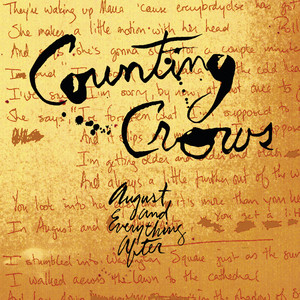
The sadness holds because the record is so patient. The Wallflowers cut it in 1996, five years after a failed debut, with producer T Bone Burnett — a man who had spent years working with artists who needed someone to slow them down rather than push them forward: Counting Crows, Los Lobos. The sessions happened at The Site in Nicasio, California, a residential studio up in Marin County where the hills kept the outside world at a distance. The band had time and used it. Five minutes and twelve seconds, and the song never once rushes toward its ending.
Rami Jaffee’s organ deserves as much credit for the sound as anything with strings. It sits in the middle of the track like a floorboard you keep returning to — not showing off, just holding the room together. Michael Ward’s guitar does the melodic work on top, and Greg Richling and Mario Calire keep the rhythm section so steady you stop noticing it, which is exactly what a great rhythm section does. They disappear into the song. The song gets to breathe.
Even the Grammy makes the case. Award culture tends toward celebration, toward crowning moments, and “One Headlight” isn’t a crowning moment. It’s a driving-through-the-dark moment. It just happens to have been driven through exceptionally well.
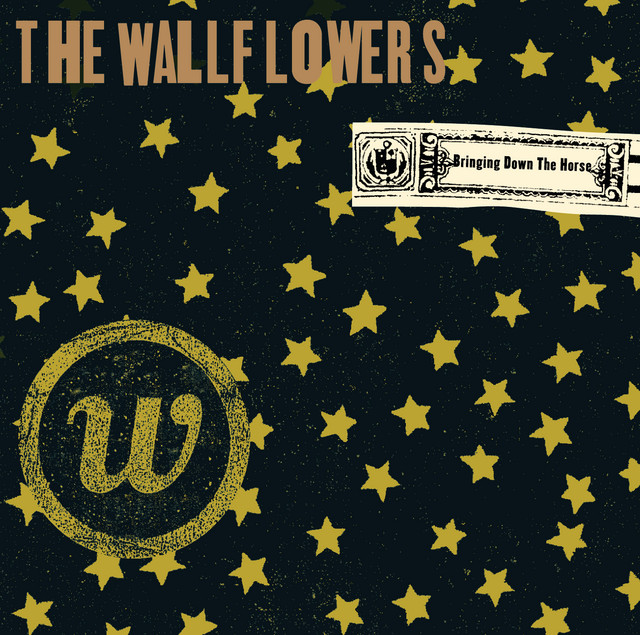
Dylan came by the dark honestly, too. His father’s name — you know the name, everyone knows the name — made every review a comparison exercise, and the comparisons were rarely generous. The first Wallflowers record, self-titled, came out in 1992 on Virgin and disappeared. The band lost members. They rebuilt. By 1996 they were a different outfit with the same front man, and what Dylan seemed to have figured out in the years between was that the name was never going to stop following him, so he might as well stop running from it and make whatever he was actually trying to make. Bringing Down the Horse sounds like a band that has nothing left to prove and a lot left to say.
The song fades on the same guitar line it opened on, the drive circling back to where it started — no arrival, the road still dark, still lit by one headlight, and the song sitting with you in the cab the whole way, the kind of company that doesn’t insist you feel better, that just keeps the radio on.