Beautiful Girl
In 1992, the year irony became the house style, Michael Hutchence hired a 60-piece orchestra and said a simple thing out loud.
In 1992, Michael Hutchence hired a 60-piece orchestra to record a song called “Beautiful Girl.”
That was the year sincerity went out of fashion. Grunge had made irony the house style — you couldn’t say something beautiful was beautiful without a caveat attached, a smirk to prove you knew better. Everything had to be deconstructed. Hutchence walked into a studio with sixty musicians and made a song that does exactly what the title says.
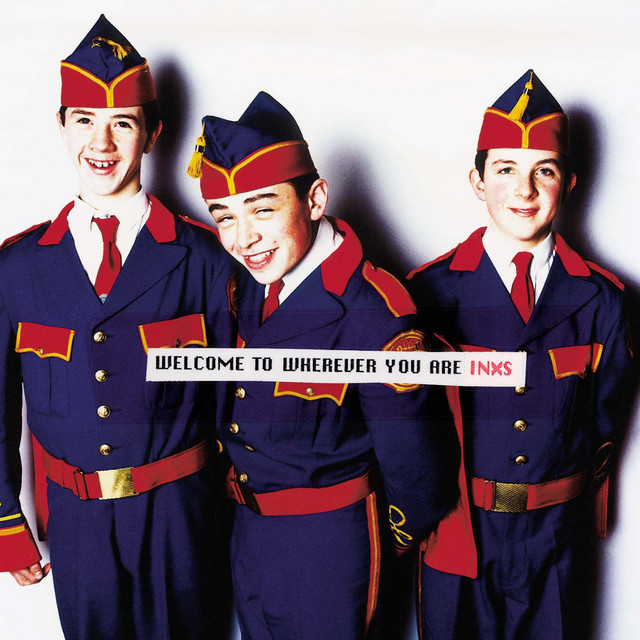
Welcome to Wherever You Are was INXS refusing to repeat themselves. Kick had made them superstars — “Need You Tonight,” “Devil Inside,” all that sleek, sexy funk-rock. The safe move was obvious. They could have made Kick 2 and nobody would have blamed them. Instead they brought in an orchestra and started experimenting.
“Beautiful Girl” is the softest thing they ever recorded. Hutchence built his career on raw sexuality, on stage presence that could melt speakers. Here he sounds almost shy. His voice floats above the strings — reverent, wondering. He’s not trying to seduce anyone. He’s trying to describe what it feels like to be genuinely stunned by another person. That is a harder thing to sing than desire. Desire performs. This just stands there and says what it sees.
The arrangement matches him. The strings don’t swell for effect — they breathe, they hover, they leave room. It’s the kind of orchestration that trusts the melody to carry the weight, and the melody does.
It wasn’t a hit. By 1992 INXS was already sliding from their commercial peak, and the moment had moved on to bands that wouldn’t have been caught dead near a string section. The song came out, did its modest business, and settled into the back of the catalog.
Hutchence had five years left to live.
I don’t bring that up to make the song sadder than it is. The song doesn’t know what’s coming; it isn’t haunted, and pretending otherwise would be cheating. But it changes what the recording is. A man who could have anything chose, with the time he had, to stand in front of an orchestra and say a plain true thing without protecting himself. Most of his peers that year were busy proving they didn’t care. He spent three and a half minutes proving he did.
The people who love this song really love it. It never needed everyone — it works like a secret handshake for romantics in a cynical decade, passed from one person to another, here, listen to this. Some songs guard themselves with cleverness and you admire them from a distance. This one has no guard at all.
That’s the risk Hutchence took, and it’s the whole record of the song: a man with every reason to play it cool, choosing not to. Sixty musicians, one simple sentence of an idea, no smirk anywhere on the tape.
He meant it. You can hear that he meant it. That’s all the song is, and it turns out that’s enough.