Need You Tonight
Andrew Farriss wrote it in his bedroom on a four-track, about a minute of music per day. The finished song barely breaks three.
The ceiling is sweating. It drips onto the stage monitors of a Sydney pub while Michael Hutchence learns to hold a room the slow way — Sydney pubs, Melbourne clubs, UK tours, seven years of playing every room that would have them by 1987. None of it was glamorous. All of it mattered. Because the part I love about “Need You Tonight” is this: the track everyone remembers as pure instinct took seven years of that grind, plus a man alone in his bedroom with a four-track, writing about one minute of music per day.
That’s how Andrew Farriss built it. A minute a day, patiently, until there were barely three. One bass note repeating on the bottom. A single-string guitar phrase. When the rest of the band heard the demo, they understood right away: the simplicity was the point. Don’t dress it up. Let it be exactly what it is.
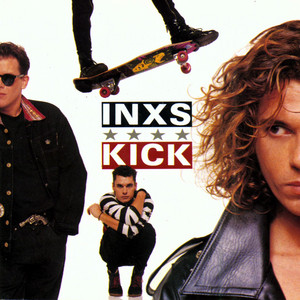
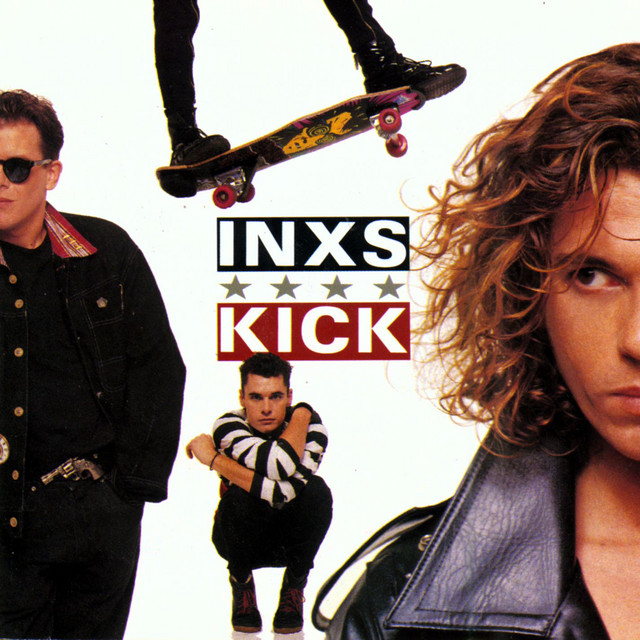
They recorded Kick in Paris with Chris Thomas producing — the same Chris Thomas who mixed Dark Side of the Moon and produced Never Mind the Bollocks — and what he brought wasn’t punk and wasn’t prog. It was the discipline to find the space inside the songs instead of filling it up. Listen to how much air is in the record. Garry Gary Beers sits on one note like a heartbeat. Kirk Pengilly and Tim Farriss play that single-string phrase and leave it alone. Everything that makes the song work lives in the gaps between the notes.
And Hutchence barely bothers with metaphor. All you’ve got is this moment. That’s the song. He sings the line like a man stating a fact, because for him it was one.
The video, directed by Richard Lowenstein, ran constantly on MTV at the precise moment MTV still mattered — when a video could make a song feel urgent in a way radio couldn’t carry on its own. It was strange and openly sensual and the programmers ran it anyway, and the song went to number one in the United States. The band’s first. Also their only.
Hutchence was twenty-seven when Kick came out, one of the best front men of his generation, and what made him that wasn’t technique — it was belief. He believed the song so completely that you had no choice but to believe it too. He died in a Sydney hotel room in November 1997, at thirty-seven, ten years after the song hit number one.
The song doesn’t know what happened after. The song is a room in Paris in 1987 — a specific group of people with everything still ahead of them, believing in what they’d made. Andrew Farriss has said he still finds it hard to listen to certain records from that era. I believe him.