Seven Nation Army
The riff everyone thinks is a bass was a guitar through a pitch shifter. There was no bass player.
The riff everyone thinks is a bass isn’t a bass. Jack White played it on a guitar through a pitch shifter, dropping it an octave. The White Stripes didn’t have a bass player, and on the song that made them famous, they didn’t go find one.
You know the riff anyway. The guy at the end of the bar knows it. Your grandmother knows it. Soccer crowds in Manchester and football crowds in Alabama know it, and most of them have no idea where it came from or that it was ever attached to a band.
That’s the whole machine, when you take it apart. A guitar pretending to be a bass, and Meg White’s drums, which sound like someone kicking a door down in slow motion. Two people. No bass, no overdubs stacked up to hide the seams. Most bands would have buried that riff under layers of production, added harmonies, complicated the arrangement. Jack and Meg let it breathe. They let it stomp.
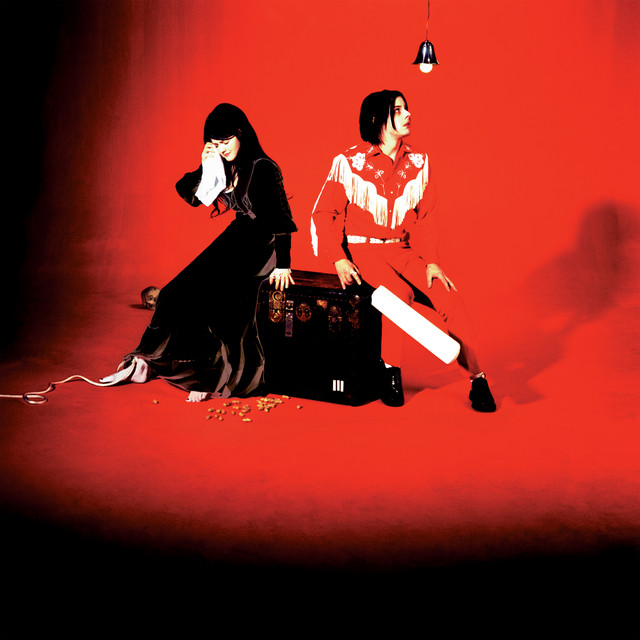
“Seven Nation Army” comes from Elephant, released in 2003. The title is a child’s mistake — Jack mispronouncing “Salvation Army” when he was a kid, the words coming out wrong and the wrong version sticking. That’s the kind of thing the song is made of. Nothing dressed up. Everything kept plain because plain was stronger.
I’m gonna fight ‘em off. Fight who. The song never says, and it doesn’t matter. It isn’t a story you follow. It’s a feeling that arrives before any of the words do — that snarling, unearned confidence that you, sitting there, could take on the whole world and not lose.
The structure is as simple as the riff. Verse, chorus, verse, chorus, bridge, out. Meg’s drums never leave their march. There’s nowhere to hide in an arrangement that bare, and the band didn’t try to hide.
So here is what happened to it. The riff came loose from the band. It plays in stadiums now, sung by people who couldn’t name the album, the year, or the two people who made it. The White Stripes wrote a guitar line on purpose, and the crowd took it and turned it into something closer to a chant than a song — a sound a hundred thousand strangers make together without being asked.
Most musicians would call that a loss. It’s the opposite. It’s the music walking off on its own legs, no longer needing the people who built it, belonging now to everyone who shows up.
Seven notes, played on the wrong instrument by a band missing the right one. Long after anyone remembers who they were, the crowd will still be singing it.