Could You Be Loved
Bob Marley recorded "Could You Be Loved" in 1980, the last year of his life, after doctors had already told him the cancer was spreading.
Bob Marley recorded “Could You Be Loved” in 1980, the last year of his life, after doctors had already told him the cancer was spreading.
He knew. The melanoma had moved from his toe — where it started, where he refused amputation because Rastafari held the body sacred — into his brain and lungs. He was thirty-five years old, still touring, still recording, and this is what he made: a song that opens with a question and never stops asking it.
The question isn’t rhetorical. That matters. A lot of love songs tell you the answer before they start. This one holds the question open for three minutes and fifty-seven seconds and hands it back to you at the end. Could you be loved? Not you are loved, not I love you, not the declarative that closes the door. The conditional. The question that implies there might be work required on your end before the answer comes back yes.
Carlton Barrett laid down the drum pattern and it is one of the great drum patterns in any music, anywhere. It doesn’t drive the song so much as hold it — the kick landing with the certainty of something that has decided not to hurry. Sly Dunbar was everywhere in reggae by 1980, and so was Carlton’s brother Aston on bass, and the whole rhythm section on this track does what the Wailers rhythm section always did best: makes the space between the notes feel inhabited. Junior Marvin’s guitar chops sit inside that space like punctuation. The groove doesn’t push at you. It waits for you.
The song was recorded at Tuff Gong Studios in Kingston, which Marley had built himself — not a label’s room, not a rental, his own studio on his own label on his own block. That is not a small thing. A Black artist in 1980 owning the room, the label, the masters, the building. He had fought Island Records’ Chris Blackwell for years over exactly this kind of control, and by the end he had most of it. “Could You Be Loved” is one of the last records he made in that room.
The lyric has a passage that gets overlooked because the chorus is so physical, so easy to move to:
Don’t let them fool ya — or even try to school ya — oh no.
That’s the song underneath the song. The whole middle section is a warning about the people who will tell you what love is and what it isn’t, who will hand you a definition that serves them and call it the truth. Don’t let them change you. Don’t let them fool you. The question could you be loved isn’t just about whether love is available to you — it’s about whether you’ll recognize it when it comes, whether you’ll be the kind of person who can receive it without immediately letting someone else’s voice talk you out of it.
Marley was a deeply spiritual man, and this is a spiritual song dressed in something that sounds like a dance record. The Nyahbinghi chant that the chorus is built around comes from Rastafari ceremony. The could you be, could you be, could you be loved — that repetition isn’t a hook in the pop sense. It’s a chant. Something to say until it settles into the body and means something past the words.
He played the Uprising Tour in 1980 — Europe, exhausting dates, a man who was already dying carrying shows by sheer presence. The last concert he ever played was in Pittsburgh, September 23, 1980. He collapsed the next morning while jogging in Central Park. He died eight months later in Miami, on his way home to Jamaica. He was thirty-six.
His mother said he smiled at the end.
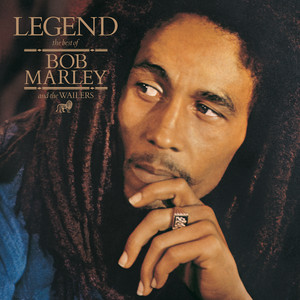
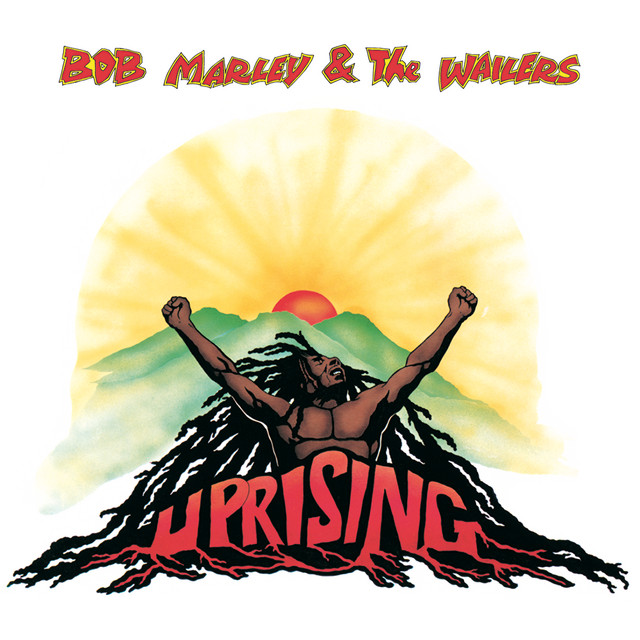
“Could You Be Loved” appeared on Uprising, the final studio album, and then later on Legend, the 1984 compilation that introduced him to a generation that hadn’t been there. Legend has sold thirty million copies or more and is one of the best-selling albums in history, which means most of the people who love this song came to it after he was gone. They found the question without him around to explain it.
Maybe that’s right. Maybe that’s the only way to take it seriously — with the man no longer in the room, no longer able to answer it for you.
Could you be loved?
He left the question. You have to find the answer yourself. That was the whole point of asking.