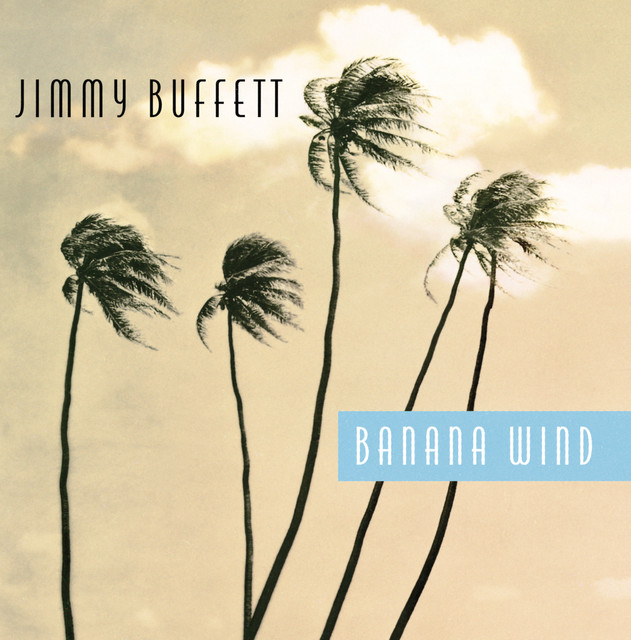
School Boy Heart
Mac McAnally wrote it.
Mac McAnally wrote it.
That’s where you have to start with “School Boy Heart,” because Jimmy Buffett gets the name on the label but Mac McAnally built the frame. McAnally is one of the great unsung craftsmen in American popular music — nine-time CMA Musician of the Year, a voice so unassuming it could walk past you in a grocery store, a songwriter who has spent his career making other people sound like the best version of themselves. He handed this one to Buffett, and Buffett walked into the studio and made it sound like something he’d been carrying for years.
Banana Wind came out in 1996, Buffett deep in his Margaritaville empire, the brand at full throttle — restaurants, merchandise, the whole coral-and-turquoise apparatus. The easy read is that he had become the thing he used to observe from the outside. But the album pushed back against that reading, and “School Boy Heart” is the sharpest push.
The song is a defense of not growing up — not in the Peter Pan way, not as a refusal, but as a choice made with open eyes. The narrator has seen the alternative. He’s watched the people who took the serious road, the responsible road, the road where you trade the kite for the briefcase and tell yourself it was worth it. He’s not romanticizing his own path. He’s just saying he knows what it cost and he’d pay it again.
“I still get a lump in my throat when she walks in the room.”
That line is doing something quiet and important. It’s not about youth. It’s about staying permeable — staying the kind of person who can still be knocked sideways by beauty, by joy, by the sudden appearance of someone who matters. The school boy heart isn’t about immaturity. It’s about keeping the nerve endings alive.
McAnally recorded his own version, as he often does with songs he gives away. Worth hearing. It’s plainer, closer to the ground, more country than tropical. What Buffett’s arrangement adds is the geography — the steel drums somewhere in the mix, the easy mid-tempo groove, the sense that this is being sung from somewhere warm with a view of water. The setting isn’t decoration. It earns its place. The school boy heart belongs to a man who found the latitude where he could still be himself, and the music tells you where that latitude is before the lyrics get there.
Buffett was fifty that year. The song is more interesting knowing that. At fifty you’ve made enough choices that the shape of your life is mostly set, and you can either make peace with it or not. “School Boy Heart” is a man making peace — not by pretending the costs weren’t real, not by pretending everything turned out perfectly, but by being honest about what he traded and deciding the trade was right.
There’s a kind of courage in that, and it’s quieter than the kind that gets celebrated. It doesn’t look like courage from the outside. From the outside it looks like a guy who never grew up, never got serious, never sat down and did the adult thing. But staying soft in a world that keeps offering you reasons to go hard — that takes something.
Buffett spent the last years of his life still playing the song, still meaning it. He died in September 2023, a few months after finishing Equal Strain on All Parts, and he knew while he was making that record that he was sick and the sand was running. He kept the school boy heart all the way to the end. That wasn’t the brand talking. The brand is a parrot and a cheeseburger. The school boy heart was the real thing underneath it, the part McAnally heard in him and wrote toward.
The lump in the throat when she walks in the room. The kite still pulling against the string. The willingness to be moved, at fifty, at sixty, at seventy-six, by the same things that moved you when you were ten.
Some people call that refusing to grow up. Some people call it staying alive.