Keith Don't Go (Live)
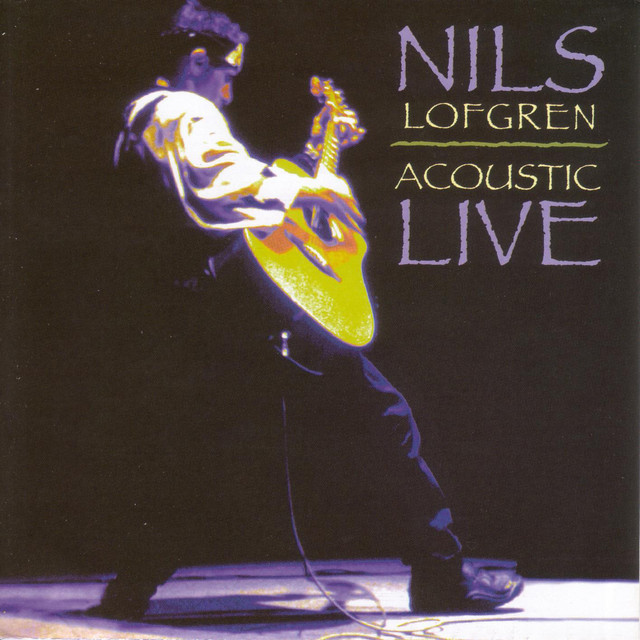
In 1975 Nils Lofgren wrote a song asking Keith Richards not to destroy himself. Keith is still here. The 1997 live version is a reference recording audiophiles use to test a system.
In 1975, Nils Lofgren put a song on his self-titled debut asking Keith Richards not to destroy himself. Keith Richards is still here.
I won’t claim the song did it. Nobody can claim that. But Nils wrote it down, set it to a guitar part most humans couldn’t play on a good day, and sent it out into the world like a letter. And the man it was addressed to outlived the worry.
Keith was in bad shape back then. Everyone knew it. So this is not an elegy written after the fact — it’s a plea written while there was still time, one guitar player to another, in the only form Nils trusted to carry it. The song reached him. It became a staple of Nils’s shows, and the man it was written for kept living.
That’s the part I keep coming back to. Most songs about a friend in trouble get written too late. This one was mailed early.
The studio version from 1975 is the blueprint. The Acoustic Live recording from 1997 is the building.
It is Nils alone on a stage with one acoustic guitar. No band. No production. No overdubs. For seven and a half minutes he covers the bass lines, the rhythm, and the lead all at once, live, without a net, and the guitar sounds like three people playing simultaneously because in every way that matters, it is.
He starts quiet — quiet enough that you reach for the volume knob. Then he builds. And builds. By the time the cascading runs arrive in the final minutes, you notice you’ve been holding your breath for a while. Around the five-minute mark his fingers start moving faster than they have any right to, the notes pouring out in waterfalls, and every single one comes out clean. Articulate. Intentional. None of it reads as showing off. It reads as a man who has spent fifty years with a guitar in his hands, and this is what fifty years sounds like when there’s nobody else on the stage to hide behind.
It helps to remember the resume. Nils was in Crazy Horse. He has been in the E Street Band since 1984. He has played with Neil Young, Bruce Springsteen, Ringo Starr — a working life spent standing next to famous men and making them sound better. That is honorable work, and it is also work that lets people forget you.
Put him alone with an acoustic guitar and there is nothing left to forget him behind. Just the playing. The playing holds.
Audiophiles use this recording as a reference test, and it’s easy to hear why. It is the track you reach for when you need to know whether a new pair of headphones or a new system is telling you the truth or just flattering you.
The test is simple. There is so little on this recording — one man, one instrument, one room — that nothing can hide. If a pair of headphones can carry the silence between the notes, the room tone of that venue, the exact moment his pick hits the string, then it’s telling the truth. If it can put you in the third row, it’s worth keeping.
If they can’t, they go back in the box.
But the gear test is only the surface reason I return to it. Underneath all the technique, this recording is a man playing a song he wrote for a friend who almost didn’t make it — still playing it, twenty-two years on, because the plea worked out.
He asked Keith not to go.
Keith’s still here.