Helpless
Fifty years of singing the line, and Neil Young still won't name the town.
There is a town in north Ontario.
Neil Young has been singing that line for over fifty years and he has never once told us the name of the town. He leaves it blank, and the blank is the whole song. The town is every town a person had to leave to become who they were going to be, and the leaving is what the song is about.
“Helpless” first appeared on Déjà Vu in 1970, the Crosby, Stills, Nash & Young record made in a Sausalito studio during one of the more combustible collaborations in rock. Four large egos, four visions, a lot of late nights. Young brought this song in and the others stacked their voices on it, Joni Mitchell somewhere in the room adding harmonics that float above the whole thing. The arrangement was spare. Three chords moving in a circle, like a man pacing a room. Dallas Taylor on drums, barely. Stephen Stills on bass. The space in the production was not a budget constraint. It was the point.
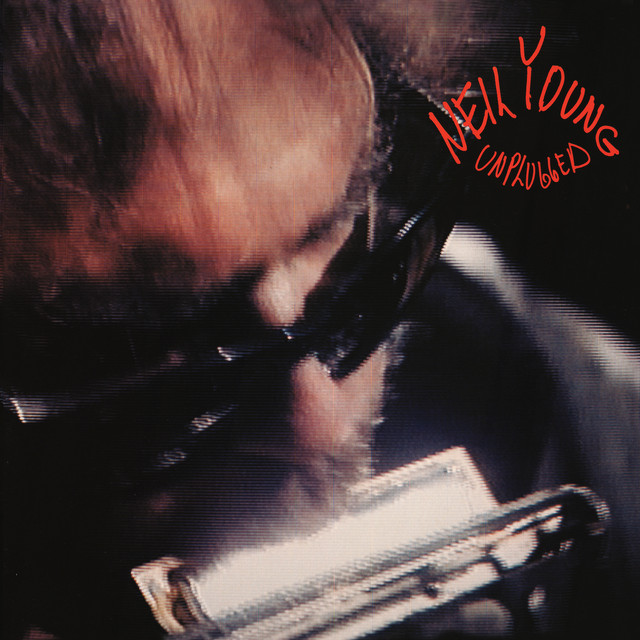
Then in 1993 Young sat down to do the MTV Unplugged record and played it alone.
He was forty-seven. The original was twenty-three years behind him. His son Ben, born with cerebral palsy, had been the center of enormous gravity in his life for years. The Tonight’s the Night years, the Trans years, the years that confused his audience and cost him commercially, all of it had passed through him by then. He was sitting in a chair with an acoustic guitar and a harmonica, playing a song he wrote at twenty-four about a hometown in the Canadian Shield, and something in his voice had changed in a way no one can fake.
“All my changes were there.”
On the 1970 recording that line is wistful. A young man looking back at a place he had barely had to leave yet. On the 1993 version, the one that runs five minutes and forty-seven seconds and breathes longer and moves slower, the same line arrives settled. He is not looking back at the changes. He has been through them. He counts them the way you inventory a house after a flood.
The guitar work is worth sitting with. Young is not a decorated guitarist and has never pretended to be. What he is, is exact. Every note on this version is chosen for what it costs to hear it. There are gaps between phrases where another player would fill in, and Young lets the room breathe. The harmonica, when it comes, sounds like a train going through a place where there used to be something and now there isn’t.
His relationship to his own catalogue is specific. He pulls songs back. He holds albums from release for years or forever. He has had famously bad relationships with record labels and streaming services and the whole machinery of music commerce. What that means in practice is that he treats his songs like things that belong to him, in the sense of a craftsman who keeps his tools sharp and doesn’t lend them out. When he plays “Helpless” live it is because he wants to. Because it still means something to him.
The song gets covered constantly and almost always fails. It looks simple. Three chords, a circular melody, lyrics that don’t rhyme cleanly or drive toward a payoff. What people miss is that the song is not built around what it says. It is built around what it refuses to say. The town stays unnamed. The helplessness is never explained. The blue, blue windows behind the stars are never resolved into a metaphor that delivers a lesson. You are left in the song the way you are left in memory, knowing something happened, knowing it mattered, unable to fully say why.
There are songs that need their writers to age into them, to gather the weight the lyrics were reaching for. “Helpless” is one of those. At twenty-four, Young wrote it perfectly. At forty-seven, he finally lived it.
He is still out there — still recording on analog tape at Broken Arrow Ranch, still pulling his catalogue from platforms he doesn’t trust, still playing this song when it means something to him. The covers keep coming and almost always fail, because they play what the song says instead of what it refuses to say. And after more than fifty years of singing that first line, he has never once named the town.