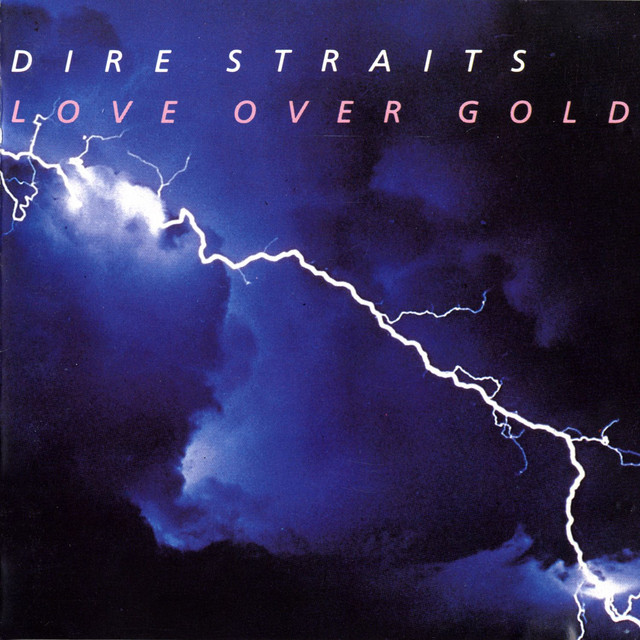
Love Over Gold
In 1982 radio was timing songs with stopwatches. Mark Knopfler wrote fourteen minutes about choosing art over money, and named the album after it.
In 1982, radio programmers were timing songs with stopwatches. Mark Knopfler wrote a fourteen-minute song that year, and named the whole album after it.
He didn’t have to. “Sultans of Swing” had already been everywhere. Dire Straits could have kept making four-minute songs with perfect guitar solos and never wanted for anything. The labels were asking for singles. He knew all of that, and he made fourteen minutes anyway.
What he made in those fourteen minutes is a small novel about choosing art over money. A song about refusing to shorten yourself could not be three and a half minutes long. It would have argued against itself before the first chorus. So the length stayed, and the length carried what the words were saying.
He knew what it would cost. This was commercial suicide and he understood that going in, which is what separates it from recklessness. A man who doesn’t know the price isn’t really choosing anything. Knopfler knew the price, named the album after the choice, and put that choice out front as the title track where nobody could miss it.
The song opens quietly. His guitar traces lines in the dark while he sets the scene, a world where everything is for sale, where doing something honestly is a luxury most people can’t afford. Then it asks you to wait. The payoff doesn’t come for eight minutes.
Eight minutes is a long time to trust a songwriter. That trust is part of the deal. The song is about patience, the patience to do a thing right instead of fast, and it asks for that same patience from you before it gives anything back. You can’t skim it. You have to live inside it a while, the way he did.
And when the payoff comes, it isn’t the climax you’ve braced for. It’s quieter than that. The song builds, there are passages that could fill a stadium, but it keeps coming back down to one man alone with a guitar, trying to explain why he can’t take the easy path. The loudest thing in the song is said at a whisper. He knew that too.
The title is not about romantic love. Love over gold means the love of doing something because it matters, not because it pays. The love that writes a fourteen-minute song knowing most people won’t sit still for it. The love that says: this is who I am, even if it costs everything.
That was 1982’s version of the fight, and the fight didn’t end in 1982. Radio edits became streaming metrics. Program directors became recommendation engines. The formats keep changing and the demand underneath them stays the same. Make it shorter. Make it faster. Optimize for attention instead of meaning. Everything Knopfler was pushing against is still pushing, harder now, with better tools.
So the song reads differently today than it could have when it was new. In 1982 it was a protest. Now it’s a record of what one musician did when the stopwatch came out. Proof that the choice existed, that somebody made it in public, at full length, under his own name. Some of us are still trying to make it.
Play it again and stay to the end. The stadium-sized passages rise and fall away, and the song keeps coming back down to where it started: one man alone with a guitar, tracing lines in the dark, taking all the time he needs to explain, at a whisper, why he can’t take the easy path.