Better Together
Ben Harper played the guitar on the original demo, and Johnson kept the feel of it — loose, front-porch, no production armor — when he brought it into the studio.
Ben Harper played the guitar on the original demo, and Johnson kept the feel of it — loose, front-porch, no production armor — when he brought it into the studio.
That detail matters because “Better Together” could have been polished into something forgettable. The melody is simple enough that a major label in 2005 would have slathered it in strings and handed it to a wedding-playlist supervisor and called it a win. Johnson didn’t let that happen. The song stayed close to the floor, the way Harper and Johnson had played it together — two guys with acoustics in a room, not trying to fill an arena.
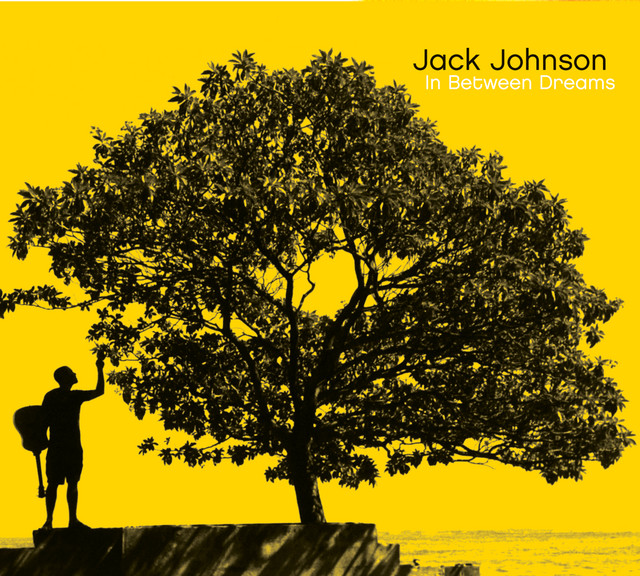
In Between Dreams was recorded at Johnson’s home studio on the North Shore of Oahu. Not a studio in Oahu — his home. The Pacific was outside the window. His wife Kim was inside the house. The whole record has the sound of a man who has figured out the part of life that usually takes longer to figure out, and is so genuinely glad about it that he doesn’t bother making it complicated.
“Better Together” is the opening track, and it announces the record’s terms immediately. No preamble, no buildup. The guitar comes in and the song is already underway, like you walked in on a conversation that started without you.
The lyric is not doing anything tricky. That’s the point.
“Love is the answer, at least for most of the questions in my heart.”
A lesser writer would have flinched at that line, worried it was too simple, too open to being dismissed as a greeting card. Johnson doesn’t flinch. He follows it with “like why are we here, and where do we go, and how come it’s so hard,” and the plainness of those questions is exactly the plainness of the life he’s describing. He’s not asking them as a philosopher. He’s asking them as a man lying next to someone in the morning, genuinely grateful for the company.
The song is about a specific person. Every word in it is addressed to her. Not the abstract idea of love, not the feeling of being in love, not love as a concept worth examining — her. The woman in the room.
Johnson was twenty-nine when the record came out. He and Kim had been together since high school in Hawaii. There’s a version of this song that could have come from that — the young couple, the uncomplicated happiness, a song too easy to have cost anything.
But Johnson had also lost his friend and fellow surfer Donovan Frankenreiter in a near-drowning as a teenager, had watched the North Shore kill people, had grown up in a place that teaches you early that beauty and danger are neighbors. He knew what the other side of a good life looked like. The warmth in “Better Together” isn’t the warmth of someone who’s never been cold. It’s the warmth of someone who knows exactly what they have and refuses to pretend otherwise.
“There is no combination of words I could put on the back of a postcard.”
That’s the turn. He’s telling her the song can’t actually do what he needs it to do — that the full weight of what he feels doesn’t fit the form. And then he puts it in the song anyway, because the trying is the point.
The song ran at number two on the adult contemporary chart, which is the chart’s way of acknowledging that it didn’t know what else to do with something this undefended. It became the song you heard at weddings, at cookouts, on the drive home from the beach at dusk. That reputation can make a song seem smaller than it is — when something becomes the background of good days, people stop hearing it.
But the song doesn’t care. It was always designed for exactly that use. Not for the big moments where music earns its importance. For the ordinary ones. Tuesday morning. The coffee ready. The window open. The person you chose still there.
There’s no drama in that. No tragedy to lean on, no darkness to make the light more visible by contrast. Just two people, a front porch, and three minutes and twenty-seven seconds of a man telling the truth about how glad he is.
He got it right the first time and left it alone. That’s harder than it sounds.