Flake
Jack Johnson was a professional surfer before he picked up a guitar. "Flake" is what all that waiting on water taught him about waiting on people.
Jack Johnson was a professional surfer before he ever picked up a guitar.
That’s the fact to hold onto with “Flake.” Before he was a songwriter he was a man who spent enormous stretches of his life sitting on the water, waiting for something he could not control to arrive on its own schedule. Then he wrote a song about people who don’t show up.
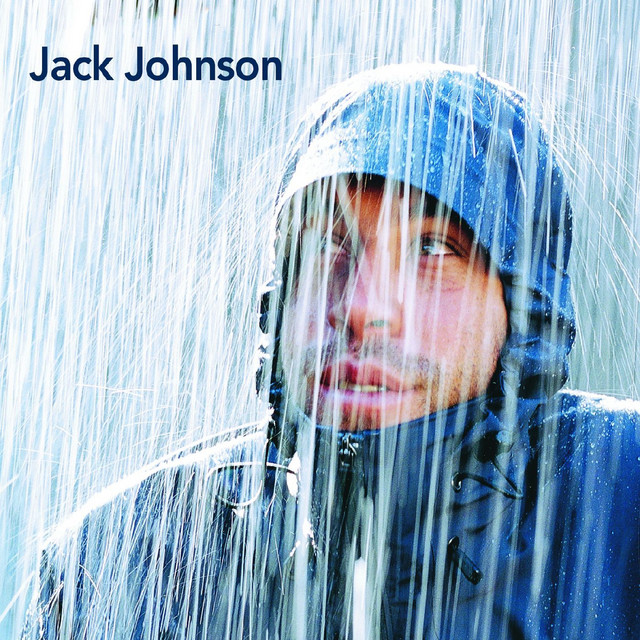
“Flake” is on Brushfire Fairytales, the debut he put out in 2001. You probably know the record even if you’ve never bought it. For about a decade after it came out, it was the sound of beach bonfires and dorm rooms — the album somebody always had.
It’s the kind of record that’s easy to dismiss because it goes down easy. I’d ask you not to dismiss this song.
Here is what the song is about. It’s about the person who says “maybe” when they mean “no.” The person who agrees to plans they will not keep. The person who leaves you waiting and leaves you wondering why you let yourself be surprised again.
Everybody has one of these people. Some of us have been one of these people. And the line Johnson hangs the whole song on is plain enough to miss:
“It seems to me that ‘maybe’ pretty much always means ‘no.’”
That’s it. No accusation in it. No raised voice. He’s not building a case against her. He’s stating something he has checked against his own experience enough times to stop doubting it. The sentence has the flatness of a thing you’ve finally accepted.
The music carries the same acceptance. The fingerpicking pattern is simple enough that you could learn it in an afternoon, and it just keeps turning over, patient, never hurrying toward anything. The production leaves it alone — acoustic guitar, some gentle percussion, a bass somewhere low in the mix, and nothing else. No tricks. Johnson sings the way a person talks, like he’s telling you about his day, not performing a grievance.
This is where the surfing matters, and it’s why I led with it. A man who waited for waves for a living learned something most of us fight our whole lives: that some things come when they come, and being angry at them does not bring them sooner. You can hear that patience in the rhythm of everything he plays. He is annoyed in this song — genuinely annoyed — but he is not surprised, and he is not demanding that anyone change. He’s noting it. This is how it is. This is how she is.
Being annoyed without being angry is harder than it sounds. Most of us can’t do it. Most songs about unreliable people can’t do it either.
Then there’s the other line, the one that turns the song from a complaint into something sadder and truer:
“I know she loves the sunrise, no longer sees it with her sleeping eyes.”
Read that again. It’s not an attack. It’s grief. He remembers a version of this person who got up for sunrises, and he’s watching that version disappear — or admitting she may only have existed in his head. Either way, he’s mourning who she was, or who he thought she was, before the flakiness became the whole picture. That’s what waiting on an unreliable person actually costs you. Not the lost afternoons. The lost version of them you were still hoping would show up.
Some songs rage against people who let you down. The rage feels good and changes nothing. This song does the other thing. It looks at the disappointment squarely, names it in one flat sentence, mourns what’s gone in another, and then shrugs.
I used to think the shrug was the song’s weakness — that it was too laid-back to mean anything. I was wrong. The shrug is the song. It’s the sound of a man who has finished arguing with reality, set down the case, and decided to keep his own peace anyway.
He spent years on the water waiting for things that came when they came. Then he met a person who never came at all, and he already knew what to do.