Have a Cigar
Roger Waters wrote down every word the record industry said to him. When it came time to sing it back, he had to hand the page to Roy Harper.
Pink Floyd could not sing this song.
That is not a figure of speech. Roger Waters wrote “Have a Cigar” — every line of it — and when the vocal had to go on tape, he handed the song to Roy Harper, a folk singer who happened to be recording next door. Neither Waters nor David Gilmour could sing it with a straight face. So a Pink Floyd song on a Pink Floyd album went out into the world with somebody else’s voice on it.
To understand why, you have to know where the words came from.
“By the way, which one’s Pink?” A real record executive asked that question. Asked it of a band that had been making albums for nearly a decade. The man whose job was to sell Pink Floyd did not know there was no one in the band named Pink.
Waters collected moments like that. The glad-handing. The back-slapping. The industry men who called you a genius in one breath and asked if the single could be a little more commercial in the next. He kept a file of every condescending compliment, every transparent manipulation, every conversation where a suit pretended to care about the music while the money was the only thing in the room he actually cared about.
Then he did something plainer than revenge. He wrote it all down. Not a parody of how the industry talked — the actual talk. “We’re so happy we can hardly count.” “The band is just fantastic, that is really what I think.” Those are not exaggerations of things executives say. They are the things executives said.
That is what makes the Harper vocal matter.
Harper does not mock the executive. Mockery would have been easier, and it would have let everybody off the hook — the band, the listener, the suit. Instead he becomes him. The oily enthusiasm. The practiced sincerity. You can hear the cigar smoke in his voice, the expensive watch on his wrist. He delivers the flattery the way flattery actually gets delivered: warmly, confidently, like a man doing you a favor.
And somehow that is worse.
Waters had lived on the receiving end of every one of those lines. He could quote them from memory — he did quote them from memory, that is what the lyric is. But when it came time to stand at the microphone and say them out loud, he couldn’t, and neither could Gilmour. It took a man from outside the band to play the man from outside the music.
Then there is the track itself, which is the other half of the story.
The music is deliberately, aggressively commercial. This is Pink Floyd writing a hit on purpose, proving they could do it any time they wanted. The guitar riff sounds like something designed in a boardroom to maximize radio play. Which is exactly the point. They handed the industry the very thing it kept asking them for, with the industry’s own sales pitch printed on it, word for word.
“Come in here, dear boy, have a cigar. You’re gonna go far.” The gravy train has room for one more.
Anyone who has been told they’re special by someone who wanted something from them knows this transaction. The flattery that is a door closing behind you. The opportunity that is actually an exchange, with terms written somewhere you haven’t been shown. Waters did not have to invent any of it. He only had to remember it accurately.
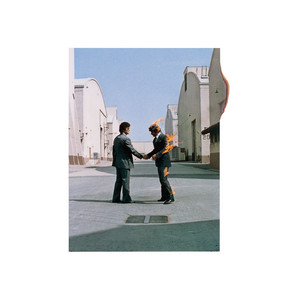
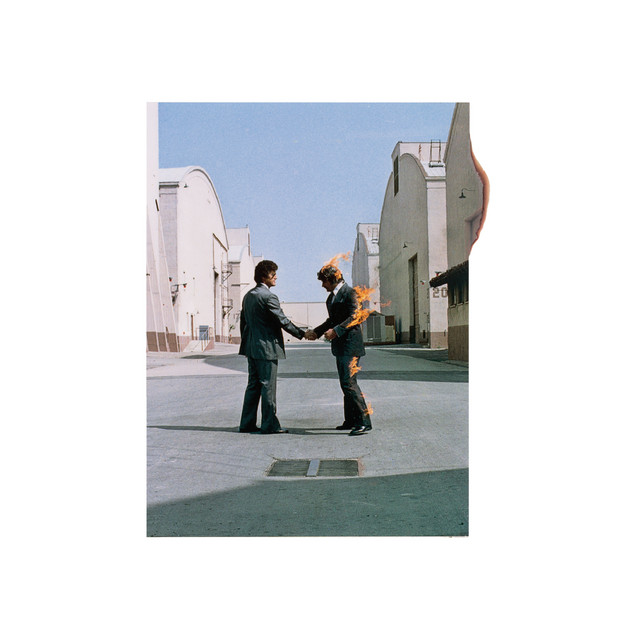
The album went out in 1975 with the borrowed voice right in the middle of it, and nothing about that was ever undone. The words Waters collected are still on the record. The voice saying them still belongs to Roy Harper, the singer from the next room, delivering the industry’s flattery the way it actually gets delivered — warmly, confidently, like a man doing you a favor.