Drive in Drive Out
Leroi Moore died in 2008. The saxophone he played on this song exists in two places now: the studio version, and the tapes.
Leroi Moore died in 2008, from complications after an ATV accident on his farm in Virginia. He was forty-six. The saxophone he played on “Drive in Drive Out” exists in two places now: the studio version, and the live tapes people kept in basements and on hard drives. Maybe a thousand of them.
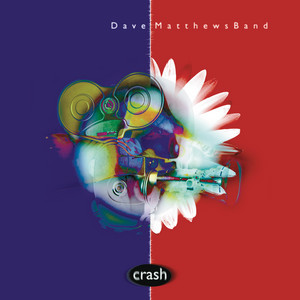
The song is track two on Crash, from 1996, and almost nobody brings it up when they talk about Dave Matthews Band. They should.
There is a version of this band most people remember. It sold a million copies of Under the Table and Dreaming, played amphitheaters, and became the soundtrack of a certain kind of college lawn party from 1994 through 1999 — Stefan Lessard’s bass, Boyd Tinsley’s violin, the warm multi-instrumental sprawl, Dave’s clipped vowels and that guitar scratch nobody else can replicate. That version is real, and it earned what it got.
“Drive in Drive Out” is not that version. From the first eight bars, Carter Beauford sets the terms: this is not a song about resolution. It is a song about motion. Forward motion that doesn’t ask where it’s going and doesn’t care.
Crash was recorded in 1995 at Bearsville Studios in Woodstock, New York, with Steve Lillywhite producing. Lillywhite had made U2’s War and The Unforgettable Fire, and he understood that a band playing together in a room is a different animal from a band assembled track by track in front of a board. These five had played thousands of shows together before they ever cut the album, and he let them be a live band in the studio. On most of Crash that comes out as warmth — space, comfortable looseness. On this track it comes out as pressure.
Live, the band would stretch the song to eleven or twelve minutes on a good night, Leroi’s saxophone pushing into the upper register until the whole thing felt close to coming apart. The studio version is five minutes and fifty-four seconds. Compressed. Every second has somewhere to be.
Beauford gets discussed in terms of technical proficiency, and he is proficient — four limbs moving independently at speeds that shouldn’t be possible. But that’s not what makes him matter here. None of it sounds like a demonstration. He isn’t playing at the song. He’s inside it, and on this track he sounds like a man who has decided the song needs to be somewhere else fast and will carry it there himself if he has to.
The lyrics are almost beside the point, which is unusual for a songwriter who, at his best, was genuinely weird and genuinely observant in the same breath. There’s restlessness in the words — driving in, driving out, someone who can’t settle, who keeps returning to the same place and leaving again — but the song doesn’t explain itself. It doesn’t try. The mood is the explanation, and the mood is this: something is coming toward you, or you are moving toward it. Either way there is no standing still.
I think most of us know that feeling without needing it explained. The song doesn’t ask you to understand it. It asks you to keep up.
The band played it relentlessly through the late nineties and into the 2000s, and the bootleg circuit caught all of it. There was a bootleg circuit — an enormous one. The fanbase treated setlists the way ornithologists treat bird sightings. On the extended versions you can hear Leroi and Boyd trading against each other while Carter keeps the pressure on, and you can hear audiences who came for “Crash Into Me” getting something else entirely — some loving it, some not knowing what to do with themselves.
That’s where Leroi’s sound on this song lives now. There was a quality to it — impatient, almost argumentative, like he had more to say than the song had time for. The band has kept going. They still play it, and it’s still good. But that sound is on the record and on the tapes, and nowhere else.
Crash sold six million copies. It had the title track, “Two Step,” “So Much to Say,” the enormous weirdness of “#41” — the songs that gave a generation of college students something to feel deeply about in parking lots. “Drive in Drive Out” was never going to be the one people talked about. It doesn’t want to make you feel deeply. It wants to make you move.
A man played a horn on it like he was running out of time, thirteen years before he was.