Walk Of Life
Play "Walk of Life" over the ending of any film and it works. The joke went around for a decade. The joke is measuring something true: the song refuses to be sad.
For about a decade there’s been a running experiment called the “Walk of Life Project.” The premise is simple: take the ending of any film and play “Walk of Life” over it. It works at the end of Schindler’s List. It works at the end of Requiem for a Dream. It works at the end of everything. People made videos to prove it. It started as a joke, and the joke is funny, but the joke is measuring something true that it never quite names.
The song refuses to be sad. No matter what you put in front of it, the song refuses.
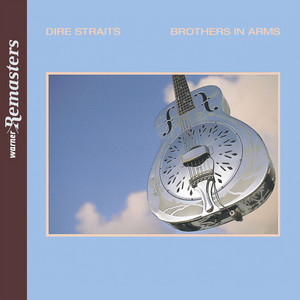
The studio version came out in 1985 on Brothers in Arms, the album that made Dire Straits the biggest rock band on earth for about three years — the album that proved a CD could sell ten million copies to people who bought it partly to hear what their stereo systems could do. “Money for Nothing” got the MTV rotation, the Sting cameo, the arena riff. “Walk of Life” was the other hit: boogie piano, a handclap beat, and Mark Knopfler’s voice sitting loose and unhurried over the top.
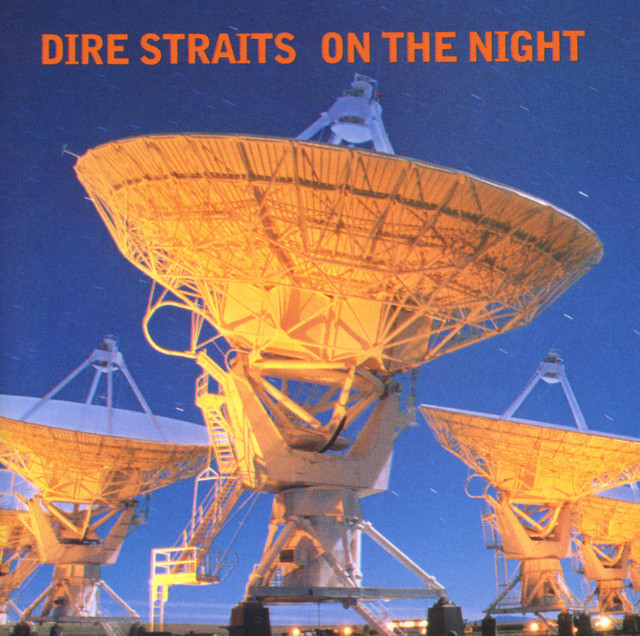
This version is different. It comes from On the Night, the live record released in 1993 and recorded on the 1992 tour dates, and it caught something the studio take couldn’t hold — the song in motion, in front of people who knew every word, the piano running hard, the band locked in, Knopfler playing like a man with nothing left to prove.
The song is about a busker. That’s the whole story it tells. A man who plays in the tunnels and subways and concourses — “down in the tunnels, trying to make it pay” — doing his Johnny B. Goode, doing his rock and roll, working a crowd that isn’t even a crowd, just commuters passing through who might or might not stop.
There’s a line in it that keeps me:
“And after all the violence and double-talk, there’s just a song in all the trouble and the strife.”
It isn’t a profound line on paper. What matters is how Knopfler delivers it — not as an argument but as a report, the way you’d say the sun came up or the tide went out. There is trouble. There is strife. And there is a man with a guitar in the tunnel, playing for whoever passes. The song states all three as facts of equal weight. It does not rank them.
Knopfler built most of his best songs this way: a working-class character at the center, quietly dignified, doing the thing he does because it’s the thing he does. He grew up watching that world and he knew its economy. Before Dire Straits he was a newspaper journalist in Leeds, playing pubs on the side. There is a version of his life where he never leaves the pubs — where he is the man in the tunnel, playing for the evening crowd. He ended up in arenas instead. He kept writing about the other guy anyway.
The On the Night take runs five minutes and six seconds. The studio version runs three twenty-two. The difference is patience. The keyboard solo opens up at the two-minute mark and the band doesn’t rush back to the chorus — they sit in the groove, Guy Fletcher’s keyboards doing the work they were built for, Knopfler not soloing so much as conversing. The crowd changes the physics of the song. You can hear that it was written for a room full of people, and here, finally, it has one.
Critics have looked down on this song for forty years. Too cheerful. Too simple. Too stadium-ready. The chugging backbeat, the doo-woo vocals, the piano line built to be easy to remember — which it was. All of that is accurate. None of it is a flaw. Some songs are simple because they’re lazy. This one is simple because it’s telling the truth, and the truth it tells happens to come with a boogie piano and a backbeat and a lyric that says its piece and gets out.
The man in the tunnel plays his songs. People pass. The strife continues. The music doesn’t fix any of it. It persists alongside it.
That’s what the Walk of Life Project found, whether or not anyone meant to find it. You can set this song against the cruelest ending ever filmed, and it will not flinch, and it will not mourn, and it will not stop.
It just keeps playing.