Going, Going, Gone
The song is two minutes and fifty-seven seconds long, and it still feels like it ends too soon.
The song is two minutes and fifty-seven seconds long, and it still feels like it ends too soon.
That’s not an accident. Luke Combs wrote “Going, Going, Gone” about the specific ache of watching your childhood disappear in real time — not in memory, not in nostalgia, but right now, while you’re standing in it, while the thing you love is still technically there but already leaving. The title isn’t past tense. It’s present tense. It’s a baseball call, the auctioneer’s countdown, the moment before the hammer falls. Still happening. You’re watching it go.
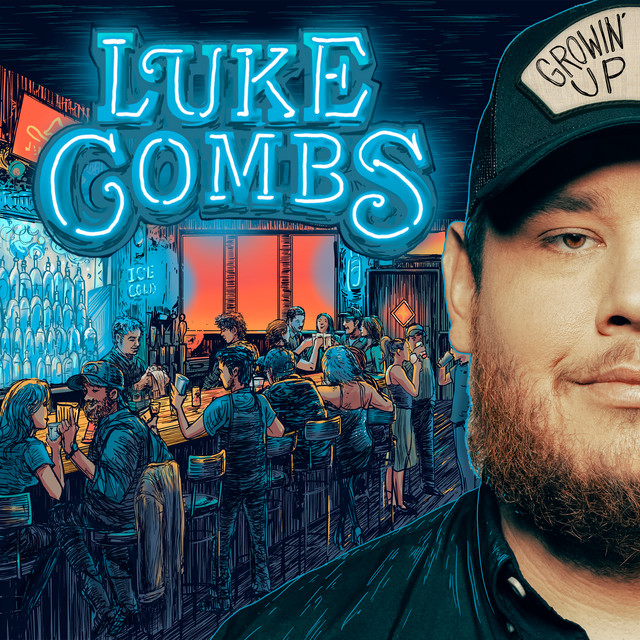
Combs grew up in Asheville, North Carolina, the kind of Appalachian foothills town where the landscape gets into you early — the mountains, the truck rides, the particular quality of summer evenings that seem infinite when you’re ten and vanish the moment you notice them. He’d been writing from that place for years by the time Growin’ Up came out in 2022, but this song is something quieter than his usual register. He strips the production down. No big chorus build, no arena-ready hook. Just the sound of a man trying to hold something in his hands that he already knows he can’t hold.
“I can still see Mama on the front porch waving, as I’m driving away from the only life I’ve known.”
What that line does — what makes it work — is the grammar of it. Not as I drove away. As I’m driving. The leaving is still happening. He’s still in the middle of it. That’s the particular cruelty the song is honest about: you don’t get to go back and feel the grief when it’s appropriate and manageable. You feel it while you’re leaving, while your hands are on the wheel, while the rearview is still full of the thing you’re losing.
The record was co-produced by Chip Matthews and Jonathan Singleton, who have been in Combs’s corner since before anyone knew who he was — back when he was playing the Sawmill Taproom in Boone, NC, before the machine found him and made him into the best-selling country act of his era. Matthews and Singleton know how to build Combs a room that fits. On this one, they gave him space. The acoustic sits front and center. The drums are quiet enough that you can hear the wood of the guitar. It’s a production decision that amounts to an argument: this song doesn’t need to be bigger than it is. Don’t chase it. Let it be small.
Small is right. The feeling it’s after is intimate and private, the kind that doesn’t survive being inflated. There’s a version of this song that gets the full truck-commercial treatment — swelling strings, choir in the final chorus, a key change that announces to everyone that we are now experiencing something Important. That version would be a lie. This version is true.
By 2022, Combs had already had a run of success that would be hard to overstate — the back-to-back number ones, the streaming records, the sold-out stadiums. He was living the life that country songs are supposed to be pointing toward, the dream that gets described in the verses while you’re still young enough to be chasing it. And he used that moment to put out a record called Growin’ Up, named after the thing he’d already done, looking back at the ground he’d covered.
There’s something deliberate in that. A man at the height of his commercial power choosing to write about what it cost to get there — not the sacrifice in any grand sense, just the ordinary quiet loss of the life that came before. The friends who stayed in Asheville. The house that doesn’t feel the same when you visit. The version of yourself that only existed before anyone knew your name.
“And it’s going, going, gone.”
He sings it plainly. No ornamentation. Three words that contain the whole thing.
The song is almost shockingly short. Two minutes and fifty-seven seconds in an era when country radio runs four-minute anthems, when every artist is working with producers to make the hook land inside thirty seconds for the algorithm. “Going, Going, Gone” doesn’t seem to care about any of that. It says what it has to say and stops. It trusts the listener to sit in the silence at the end.
That trust is the rarest thing in the genre right now. Most country songs explain themselves. They tell you what to feel and then tell you again in the bridge. This one just holds the image — the front porch, the waving mother, the moving car, the rearview — and lets it sit there. You either know what it means or you don’t, and if you don’t, you will someday, and the song will still be here when you do.
It goes fast. That’s the whole testimony. You look up and it’s gone, and you were there for all of it, and somehow that doesn’t help.