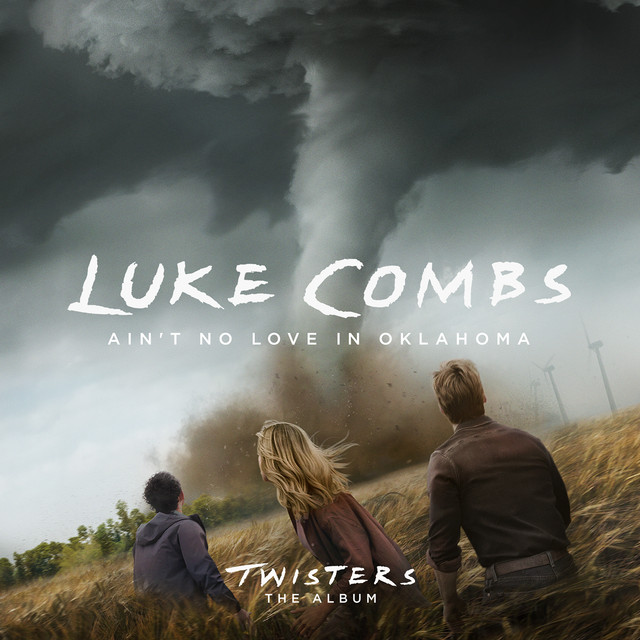
Ain't No Love In Oklahoma
This song came off a movie soundtrack — the place songs usually go to be forgotten. This one walked out of the theater on its own.
This song came off a movie soundtrack.
That is usually where a song goes to be forgotten. Written to order, pinned to somebody else’s story, played over the credits while people look for their keys. Soundtrack songs are furniture. This one got up and walked out of the theater on its own.
Twisters was a sequel nobody asked for. The original had already said everything that needed saying about storm chasers and flying cows, decades before, and there was no obvious reason a second pass would find anything new in the wreckage. But the soundtrack understood something the movie didn’t: you can’t just remake the disaster. You have to find the feeling underneath it.
Luke Combs found it.
The song is not about tornadoes. The storm is the frame, the borrowed weather, the thing standing in for the thing. What it’s actually about is the aftermath — the moment the sky clears, you walk outside, and you understand that everything you thought was solid has been ripped away while you were watching the horizon.
And the song never tells you what was taken. The loss could be romantic. It could be familial. It could be a whole way of life that got swept off the map. It doesn’t say, and it doesn’t have to, because anyone who has stood in that kind of morning knows the shape of it regardless of what filled it. The storm is the metaphor. The emptiness is real.
“I’ve been running from it, running from the pain.”
That’s the engine of the whole song, stated flat. No imagery to decode, no wordplay to admire, nothing you need a literature degree to unlock. Modern country gets dismissed for exactly this plainness, and the dismissal has it backwards. Saying the thing directly is not the easy way — it’s the exposed way. There is nowhere to hide in a line like that. You either mean it or everyone can hear that you don’t.
Combs means it. He sings about loss the way he sings about everything, in a voice that sounds lived in, slept in, cried in. The guitars behind him know exactly how loud to be — loud enough to carry the weight, never loud enough to cover for him. He doesn’t need cover.
This is how he became the biggest name in country music, and it’s worth saying plainly how the trick works, because it isn’t a trick. He takes a universal feeling and makes it specific. Then he makes it specific enough that it turns universal again — your storm, your county, your morning after, whatever name your loss goes by. The song hands you the frame and lets you put your own picture in it.
That’s why it outran the movie it was built for. A disaster film needs the disaster: the funnel cloud, the debris, the spectacle. A song doesn’t. A song can skip straight to the part the camera never stays for — the day after, the quiet, the inventory of what’s gone. It’s the song you hear when the worst of something is already over and you’re left doing the math on what it cost. Nobody chases that part. Everybody lives in it.
The movie said everything it had to say about the wind.
The song is about what the wind leaves. The sky clears, the noise ends, and you’re standing in the quiet, counting.
Sometimes the disaster isn’t the destruction. It’s what’s left when the wind stops.