Comedown
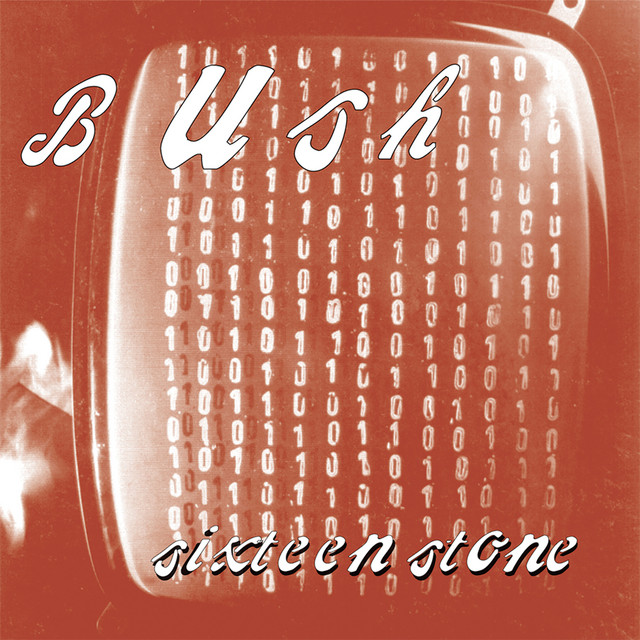
Critics called Bush a Nirvana copy. Six million Americans bought Sixteen Stone anyway. Both things are true, and the gap between them is the song.
Sixteen Stone sold six million copies in the United States.
The critics hated it. Too derivative, they said. British guys doing American grunge, copying Nirvana, arriving too late to the party. Hold both of those facts at once — six million records, and a critical consensus that the band had nothing to offer — because the distance between them is what this song is actually about.
Start with the honest part: the critics weren’t entirely wrong. Gavin Rossdale didn’t invent anything. The song does the quiet-loud-quiet thing that Pixies invented and Nirvana perfected. The verses simmer. The chorus explodes — walls of distortion, drums pounding, his voice pushed to the edge of breaking. Then quiet again. Repeat. You could draw the blueprint from memory, and plenty of reviewers did, with relish.
What the blueprint doesn’t account for is what Rossdale put inside it. His voice curls around lyrics that don’t quite make grammatical sense. They land anyway. He felt things loudly and clearly, and it turns out that’s enough. It shouldn’t be enough — every rule of criticism says it isn’t — but six million people are hard to argue with.
“Comedown” is about the aftermath. The crash after the high. Not drugs, necessarily — just the cycle of intensity and collapse that comes with feeling everything at full volume. You burn bright. You burn out. You need someone to catch you on the way down.
That’s not an original observation. It’s just a true one, and the difference matters more than we usually admit. Originality is a virtue critics can measure. Truth is the one listeners can. A reviewer hears “Comedown” and catalogs its influences. Somebody driving home from a job they hate hears it and recognizes their own week.
I think that’s why the derivative charge, accurate as it was, never landed where it was aimed. Nobody who bought this record was grading it on invention. They were tired, and the song was about being tired. Rossdale wasn’t a visionary. He was honest about being worn out and needy and hoping someone would stick around for the hard parts. You can build that confession out of borrowed materials. The materials aren’t the confession.
Bush ended up bigger than most of the bands the critics preferred. That fact gets used two ways, and both are wrong. It doesn’t prove the critics were fools — popularity has crowned plenty of junk. And it doesn’t prove the band was a guilty pleasure the public should apologize for. What it proves is narrower and more interesting: sometimes the bands that connect aren’t the ones pushing boundaries. They’re the ones articulating what everyone already feels. There is a job in music that consists of saying the common thing clearly, at the right volume, at the right moment. It’s not the glamorous job. Somebody has to do it.
The mid-nineties were full of bands processing their emotions through distortion. Most of them have been forgotten — the original ones and the imitators alike. This song survives, and the reason isn’t anything a review could have measured at the time. The comedown never stops being relatable. Every generation climbs toward something, burns out reaching for it, and needs catching. The song was never about its decade. The decade just supplied the guitar tone.
So here’s where I land. “Comedown” knows exactly what it is. It is not the invention. It is the feeling, delivered intact, by a man the smart people had already dismissed.
Sixteen Stone came out in 1994 and sold six million copies in the United States.