Sweetest Thing
Bono wrote "Sweetest Thing" for Ali because he forgot her birthday.
Bono wrote “Sweetest Thing” for Ali because he forgot her birthday.
That’s the origin — not a lyric searching for its subject, not a studio experiment, not a B-side filler cranked out on a contract deadline. He forgot his wife’s birthday. He was deep in the sessions for The Joshua Tree, which was eating everything, and the date passed, and he wrote her a song instead of buying a gift. The whole three minutes and four seconds is an apology. A pretty one. But an apology.
There’s something worth sitting with in that. The Joshua Tree is one of the grandest records rock music produced in the 1980s — Edge’s guitar opening “Where the Streets Have No Name” like a door swinging open onto something enormous, “With or Without You” doing things to people in the dark that they still haven’t recovered from. The album is about America and longing and faith and absence. It is ambitious in the way that can tip over into self-importance. And tucked into the B-side of “Where the Streets Have No Name” is this small, bright, slightly sheepish song that Bono made for the woman he married when they were both teenagers in Dublin. She got left out of the record that was consuming him. He noticed. He said sorry the only way he knew how.
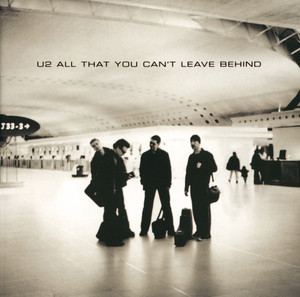
The song wasn’t on the original album. It sat as a B-side for more than a decade, known mostly to the completists who flipped the single over. Then in 1998 U2 re-recorded it for the compilation The Best of 1980–1990 — fuller production, a bigger arrangement, a music video shot in Dublin with a marching band and a zebra, which is either charming or absurd depending on your relationship to U2 at that particular moment in their career. That version hit number one in the UK. The original never charted at all.
The re-recording is the version most people know now, and it’s fine — it’s polished, it opens up the melody and lets it breathe. But the 1987 version has a quality the later one traded away. It’s closer to embarrassed. It doesn’t quite believe it deserves the room it’s taking up. The production under Brian Eno and Daniel Lanois keeps it small and slightly tentative, like a man knocking at a door he’s hoping he hasn’t locked himself out of.
Ali Hewson has been with Bono since they were in school. She is not a footnote in his story; she is, by most accounts, the anchor of it — the person who stayed steady while the records and the stadiums and the whole circus grew to a size that swallows most ordinary lives completely. He has said so repeatedly, in interviews and acceptance speeches and in the way he keeps writing about her across a catalog that spans fifty years. “Sweetest Thing” is the most direct version of that — no metaphor, no grand geopolitical framework, just the specific small failure of a man who was so busy making something for the world that he forgot the person at home.
“I’m losing you and it’s effortless.”
That line is the quiet center of the song. Not dramatic. Not accusatory. Just true in the way that things become true when you finally say them plainly — effortless loss, the kind that happens not in a fight or a betrayal but in an accumulation of ordinary days where one person is absent and the other keeps showing up.
The sweetest thing, he says, and what he means is her — but also the whole project of trying to hold onto something real when the thing you do for a living requires you to be enormous and distant and consumed. He doesn’t resolve it. The song doesn’t end with forgiveness granted or the birthday made up. It ends with the want still there, unmet, the blue-eyed boy still looking for a way back in.
They’ve been married since 1982. Whatever he got wrong, he kept trying to get it right. The song is evidence of that — not proof of success, just proof of effort. A man remembering what he forgot and deciding the remembering itself was worth saying out loud.
He gave her a song. It’s the sweetest thing he had.