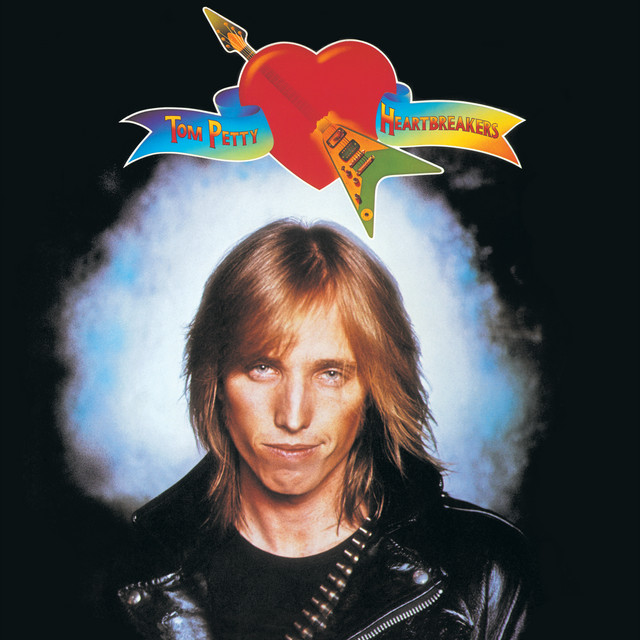
American Girl
Tom Petty wrote "American Girl" on a second-floor apartment balcony in Encino, California, listening to the sound of the 101 freeway and mistaking it for the ocean.
Tom Petty wrote “American Girl” on a second-floor apartment balcony in Encino, California, listening to the sound of the 101 freeway and mistaking it for the ocean.
That’s not a metaphor. He said it himself — he was living near the freeway, the traffic noise drifted up at night, and some part of his brain filed it under waves. The girl in the song stands on a balcony and listens to the world rushing past below her, certain that something out there belongs to her. Petty was listening to cars. His mind heard the Pacific. You can hear that gap — between the life in front of you and the life you’re sure is coming — in every note of the song.
He was twenty-five. He’d moved to Los Angeles from Gainesville, Florida, where he’d grown up the son of a difficult father in a house that wasn’t easy to leave. By 1976 he had a band, a deal, and a debut record that the label, Shelter Records via ABC, was not entirely sure what to do with. The Heartbreakers were too loud for the country stations and too roots-rooted for the rock stations, and nobody had quite figured out yet that Petty was writing songs that would outlive the format problem.
Mike Campbell played the opening guitar riff on “American Girl.” Not Petty — Campbell, who had been playing alongside Petty since Gainesville, who spent decades as the most underrated guitarist in American rock. That descending figure, those four notes tumbling down and catching themselves, is the song before the song starts. It sounds like something you’ve heard a hundred times the first time you hear it, and that’s not an accident. It is so confident in itself that it arrives already a classic.
The record was produced by Denny Cordell and Petty himself, cut at Shelter’s studio in Los Angeles. When the album came out it sold modestly in the States. It sold enormously in England, where somehow the Heartbreakers’ mix of Byrds jangle and Stones grit landed as exactly what people wanted. The band toured the UK before they ever properly broke in America. Petty used to tell the story like a joke, but there was real gratitude underneath it — England kept them alive long enough for America to figure it out.
The American radio breakthrough came slower, and it came in part because the song wouldn’t let go. It got programmed, pulled, reprogrammed. By the time MTV arrived the Heartbreakers were suddenly everywhere, but “American Girl” had been working quietly before any of that, the way certain songs do — gathering listeners one at a time, finding the people it belonged to.
“She was an American girl, raised on promises.”
What is she promised, exactly? The song doesn’t say. It doesn’t have to. She’s been raised on the general American promise — that the good thing is out there, that you can feel it from here, that the wide world is full of something better than the balcony you’re standing on. Petty understood that feeling from the inside. He’d stood on his own version of that balcony, listening to the freeway and hearing the sea.
The song doesn’t punish her for wanting. It doesn’t punish her for the wanting going unfulfilled, either. It just watches her stand there in the last light of the day with her whole life ahead of her, and it loves her exactly as she is — restless, hopeful, raised on promises that the world may or may not keep.
That’s a harder thing to write than it sounds. A lot of songs about longing end with a verdict. Petty refuses to deliver one. She’s already gone for the rest of the night by the end of the last verse, already out there trying. The song doesn’t follow her to find out what happens. It stays on the balcony.
Petty died in October 2017, a week after the Heartbreakers finished what turned out to be their final tour. He was sixty-six. The circumstance — a career-long struggle with injury, pain management, what his family described as an accidental overdose of medication prescribed after a broken hip — was reported after the fact, while the country was still absorbing the basic news of the death. He had just played forty cities. He had just stood in front of fifty thousand people at the Hollywood Bowl and played this song, and then he came home.
Campbell is still here, still playing. Benmont Tench, the keyboard player who colored every Heartbreakers record with something between gospel and regret, is still here. The band was always more than one person, even if one person wrote the songs.
The freeway is still out there in Encino. Somebody is standing on some second-floor balcony right now, hearing the traffic and feeling, for just a second, like it might be the sea — like the whole good noisy world is moving toward them rather than past them.
That’s the song. That’s what it holds.