Life in a Northern Town
Nick Laird-Clowes wrote "Life in a Northern Town" as a eulogy for Nick Drake.
Nick Laird-Clowes wrote “Life in a Northern Town” as a eulogy for Nick Drake.
Not an obvious one. There’s no mention of Drake by name, no direct quotation, no monument. Just a song built in his shape — the cold air, the empty fields, the young man gone before anyone understood what they had. Laird-Clowes had been obsessed with Drake’s music, with the waste of it, with the fact that a man could make Pink Moon and Five Leaves Left and die at twenty-six in his childhood bedroom and have almost nobody notice in time. The song is his way of standing at that grave without being able to say exactly why he’s there.
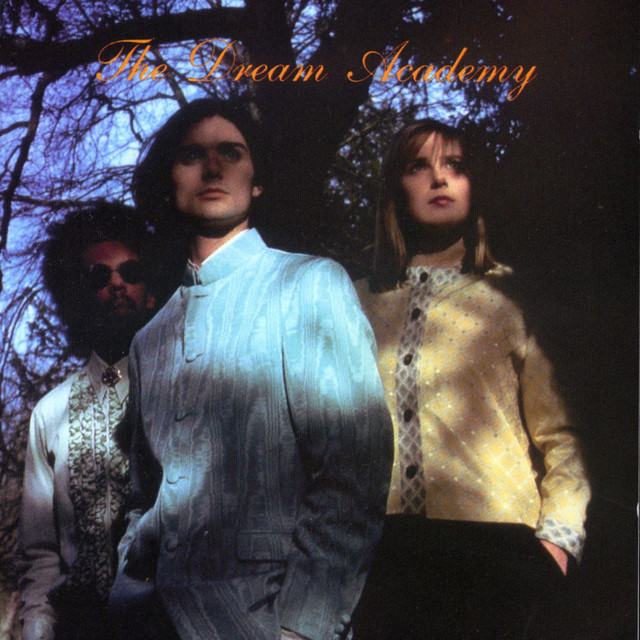
The Dream Academy recorded it in 1985 with David Gilmour producing — which sounds like an odd pairing until you hear the record, and then it sounds inevitable. Gilmour had the patience to hold back. He let the song breathe. The arrangement is mostly Kate St. John’s oboe and a children’s choir from the London Oratory School, and the combination is almost unreasonably effective: the oboe has that quality of cold outdoor air, and the children sound like memory itself — high and clear and a little bit lost.
The hey-ma-ma-ma refrain is the thing people remember, which makes sense because it’s the thing that goes deepest. It has no meaning. That’s the point. It’s the sound of a song running out of words and doing what songs do when words fail — it falls back into pure sound, into something pre-verbal, the kind of syllables a child makes before it knows what it’s asking for.
The lyrics describe a town in winter in the early 1960s: a Saturday, the markets, young men with time to kill and nowhere to go. In winter 1963, it felt like the world would freeze, with John F. Kennedy and The Beatles. The JFK line is load-bearing. Kennedy was shot in November 1963; the Beatles played the Royal Variety Performance that same month. The world was cracking open and closing at the same time, and in the northern towns — Tamworth, Mansfield, places like that, places with mill smoke and brick terraces and a Saturday market that was the whole of the social calendar — none of it reached all the way in. You could feel the era changing through a kind of distant static, the way you hear thunder before you see the storm.
That’s the emotional core of the song. Not the loss of Drake specifically, but the loss of a certain kind of ordinary life that existed right at the edge of something enormous and never quite touched it. All those young men in all those northern towns in 1963 who were about to be changed — and some of them were about to be lost — and they didn’t know either thing yet.
It was the Dream Academy’s first single, and it became their only real hit, which is the kind of career fact that looks like a failure and isn’t quite. If you’re going to have one song, have one that does something true. “Life in a Northern Town” does something true. It builds a world in four minutes and nineteen seconds — the cold, the market, the feeling of being young in a place that wasn’t going anywhere, the sense that time was moving somewhere else — and then it ends the way all elegies end, which is not with resolution but with the thing being over.
Gilmour kept the children’s choir. He kept the oboe. He kept the spaces between the notes, which is where the cold air lives. If someone had told him to fill those spaces in, to add a guitar line, to make it warmer, it would have become a different song. It would have become a comfortable song. Gilmour understood that comfort was the one thing the song couldn’t afford.
Nick Drake never knew the song existed. He was already gone by the time Laird-Clowes could have told him. That’s the strange grief at the center of it — a tribute the person who earned it can never hear, a conversation that only goes one direction.
But that’s what the hey-ma-ma-ma is, maybe. Not a refrain. Not a hook. A voice calling into a space where the answer isn’t coming, and keeping on anyway, because what else do you do. You call. You stand in the cold. You watch the market. You remember a winter, a young man, the feeling of something being close to beautiful and then gone.
You keep singing.