All Along the Watchtower
Bob Dylan wrote it, then spent the rest of his life playing it the way Jimi Hendrix played it.
Maybe this has happened to you: you hear a new version of a song you thought you knew, and the old version stops being available. It happened to the man who wrote this one.
Bob Dylan said so himself. After he heard what Hendrix did with “All Along the Watchtower,” he couldn’t go back to his own version — the tempo, the phrasing, the whole shape of the thing belonged to Hendrix now. So Dylan started playing it Hendrix’s way, and he kept playing it that way for the rest of his life.
Dylan cut the original on John Wesley Harding in Nashville, a single session, acoustic guitar and bass and some light drums, no overdubs. He’d come out of his motorcycle accident and his retreat and gone the opposite direction from everything 1967 expected of him. While everyone else chased psychedelia, he stripped down. The song came out quiet and old-sounding, like something a man had carried around for years before he wrote it down.
Then it reached London, and Hendrix heard it.
He learned it the night before he recorded it. He walked into Olympic Sound Studios in Barnes with the song barely in his hands and cut it anyway — multiple sessions across January and February, layering overdubs, Dave Mason on acoustic guitar, Brian Jones somewhere in the building, Noel Redding and Mitch Mitchell holding on. Chas Chandler was producing, still early with Hendrix, and the story goes that Chandler thought they had it long before Hendrix did. Jimi kept going back. Kept adding. Kept pulling the thing apart and putting it back together.
What came out is four minutes that doesn’t feel like four minutes. It feels like a field at dusk in late summer, or the moment before a storm breaks. It never quite arrives at the place it seems to be heading, and that’s the whole of it.
People go straight to the solo, and they’re right to — it’s one of the best ever put on tape, all wailing sustain and controlled chaos, Hendrix bending notes toward something just out of reach. But look at what the song does as a structure. It opens on the solo. That’s backwards. The solo comes first, then the verse, then another solo, and the track just stops. It doesn’t resolve. It ends on a solo fragment, mid-motion, like the story is still happening somewhere after the tape runs out.
Dylan’s words were already strange. “There must be some kind of way outta here,” said the joker to the thief. Two figures on a watchtower, riddles about workers and plowmen and princes, wind beginning to howl. Apocalyptic or allegorical, both, and deliberately unresolved. Hendrix didn’t try to explain it. He put the song inside a sound that matched its restlessness.
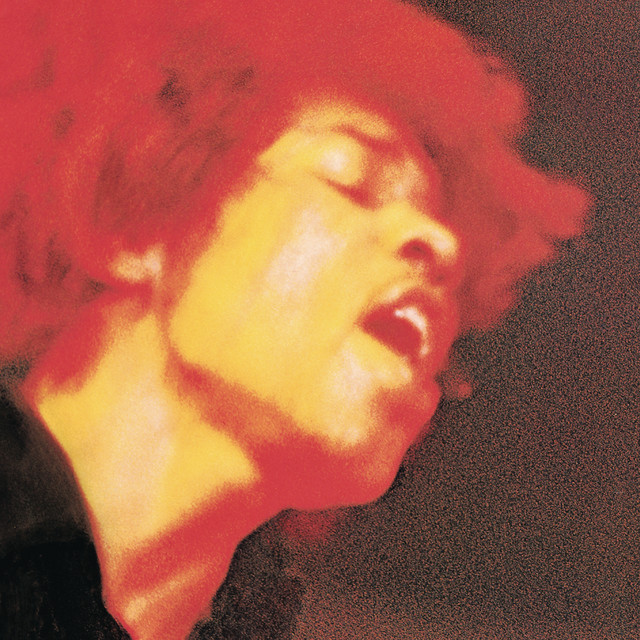
The track ended up on Electric Ladyland, the double album he released in October 1968 — a record he fought to control and mostly won, even as the label resisted and the band started fracturing. It was the last Jimi Hendrix Experience album released before his death. None of them knew that yet. He was twenty-seven when he made it.
“All along the watchtower, princes kept the view, while all the women came and went, barefoot servants, too.”
Dylan put those words on a plain acoustic guitar and they sounded like a parable. Hendrix put them inside walls of electric sound and they sounded like a warning. Neither one is wrong. A great song has room in it. It can hold more than one version of itself.
But this is the one that lodged. This is the one that plays at the end of things — in films when the screen goes dark and the credits roll and you’re still sitting there, not ready to leave. Directors reach for it when they need music that sounds like the world tipping on its axis, because that’s what it sounds like. Not explosions. Not chaos. Something quieter and worse: the feeling that something is coming, that the people on the watchtower can see it and you can’t, and the wind is already picking up.
Hendrix took a song Dylan had finished and left it open. Some songs are complete the moment they’re recorded. This one sounds like it’s still going — the joker and the thief still talking, the two riders still approaching, nobody quite sure what any of it means.
The man who wrote the song heard that, and gave it away. He played it Hendrix’s way until the day he stopped playing.